.png?w=970&h=250)
Sourcing Premium Microfleece: Anti-Static Treatments & Quality Control
What It Really Means
When outfitting an active workforce or designing a technical outdoor line, microfleece is the undeniable champion of mid-layers. It offers superior warmth-to-weight ratios compared to traditional polar fleece. But sourcing microfleece wholesale comes with a notorious, electrifying problem: static cling.
At Fominte, we know that if your customers or employees feel a shock when pulling off their half-zip, or if the fabric clings awkwardly to their base layer, the garment's perceived value plummets.
If you are an apparel buyer or product manager, understanding how your microfleece manufacturer handles anti-static chemical finishes is the difference between sourcing a premium performance piece and a cheap, frustrating knockoff.
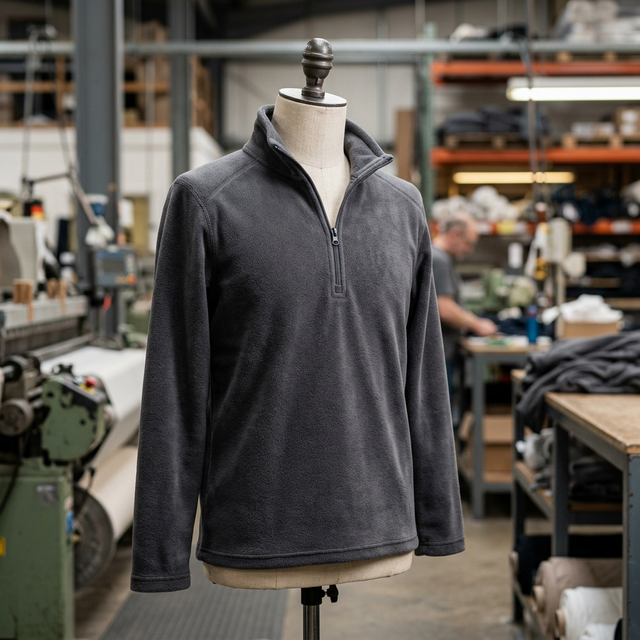
What Makes Microfleece Different?
Before addressing the static issue, it's crucial to understand what makes microfleece different from standard polar fleece.
The distinction lies in the denier (thickness) of the synthetic yarn and the resulting fabric weight (GSM). While polar fleece used for heavy winter jackets typically ranges from 260 to 350 GSM, microfleece is engineered to be incredibly lightweight—usually between 130 and 180 GSM. It feels softer, packs down smaller, and breathes better during high-exertion activities.
However, because these synthetic fibers are so fine and tightly knitted, they create an enormous amount of surface area, which exponentially increases friction against other layers. This means more static.
The Static Electricity Problem: How Our Factory Solves It
Polyester is inherently hydrophobic, meaning it doesn't absorb moisture. In dry conditions or during cold winter months, friction causes electrons to transfer, building up a massive static charge that has nowhere to go. This causes the infamous "cling" and the startling electric shocks.
To counteract this, a premium manufacturer must intervene at the chemical level during the dyeing and finishing stages.
Permanent vs. Temporary Anti-Static Finishes
Many discount factories use temporary anti-static sprays right before shipping. The garments feel fine out of the box, but after the first wash, the static returns with a vengeance.
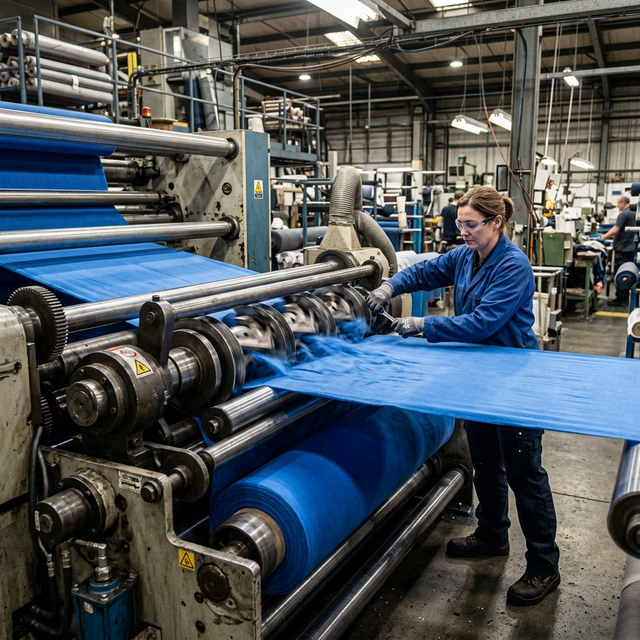
At Fominte, we utilize durable, hygroscopic anti-static agents applied via a Pad-Dry-Cure method. These chemical finishes, often built from polyamines or advanced non-ionic surfactants, are padded onto the fabric, dried, and then heat-cured.
This process fundamentally alters the surface conductivity of the fiber. By making the surface slightly hydrophilic (attracting trace amounts of moisture from the air), we create a conductive layer that allows static charges to dissipate harmlessly before they build up. Because we cure these finishes into the fabric matrix, the anti-static properties withstand dozens of industrial wash cycles.
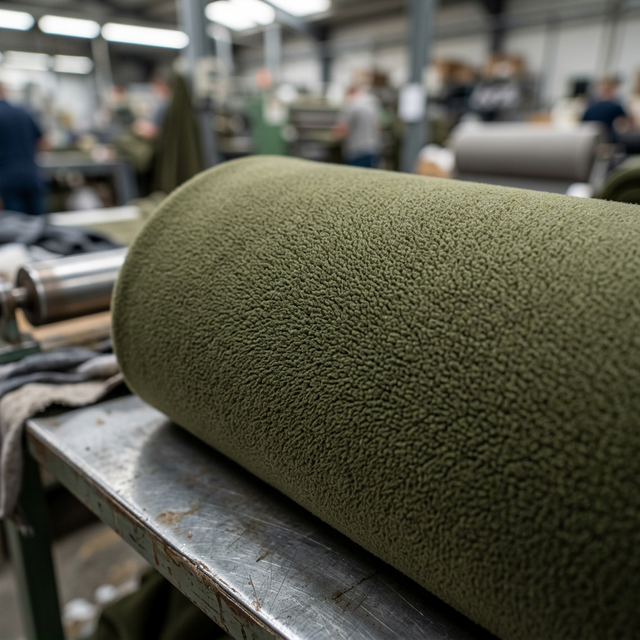
Quality Control in Microfleece Manufacturing: Brushed for Softness
Beyond static control, the "hand feel" of microfleece is dictated entirely by the finishing mill's brushing and shearing expertise.
The Shearing Process for a Velvet-Like Hand Feel
Cheap microfleece feels scratchy and pills almost immediately because the fibers are roughly raised and left uneven.
We employ a meticulous "double-brush, single-shear" process. Specialized machines use wire bristles to raise the fine polyester loops on both sides of the fabric, maximizing trapped air for thermal insulation. But the most critical step is the shearing. We pass the fabric through precision rotary blades that trim the raised nap to an identical, ultra-short length across the entire roll. This creates the signature buttery-soft, velvet-like texture that premium outdoor brands demand.
Essential Design Features for Microfleece Mid-Layers
When utilizing this highly technical fabric, construction details matter:
- Seam Construction: Always specify flatlock or overlock stitching with soft nylon thread to prevent chafing against the wearer's skin or base layers.
- Zippers: For half-zips, use lightweight #3 nylon coil zippers to prevent the collar from sagging under the weight of a heavy zipper pull.
- Heat-Setting: Ensure your factory heat-sets the fabric rolls at high temperatures (typically around 180°C to 190°C for polyester) before cutting. This locks the fabric structure, preventing the garment from shrinking or twisting in the wash.
When to Use & Avoid
Activewear Mid-Layers
✅ Use When
- 130-150 GSM, Anti-static finish, #3 coil zippers
⚠️ Avoid When
- Heavy 300 GSM fleece
Corporate Uniforms
✅ Use When
- 150-180 GSM, Double-brushed
⚠️ Avoid When
- Temporary topical anti-static sprays
Comparison
| Manufacturing Step | Cheap Microfleece Reality | Fominte Quality Standard |
| Anti-Static Finishing | Topical spray (Washes out immediately) | Pad-Dry-Cure durable hygroscopic finish |
| Fabric Shearing | Uneven nap, leaves a scratchy hand feel | Precision rotary blades for a velvet-like texture |
| Dimensional Stability | Un-set fabric (Shrinks drastically) | Heat-set at 180°C+ before cutting |
⚡ Common Mistakes to Avoid
Everything You Need to Know
Conclusion