.png?w=970&h=250)
Brushed Cotton Jersey Knit Fabric: Comfort, Pilling Control, and Bulk Consistency for Serious B2B Buyers
What It Really Means
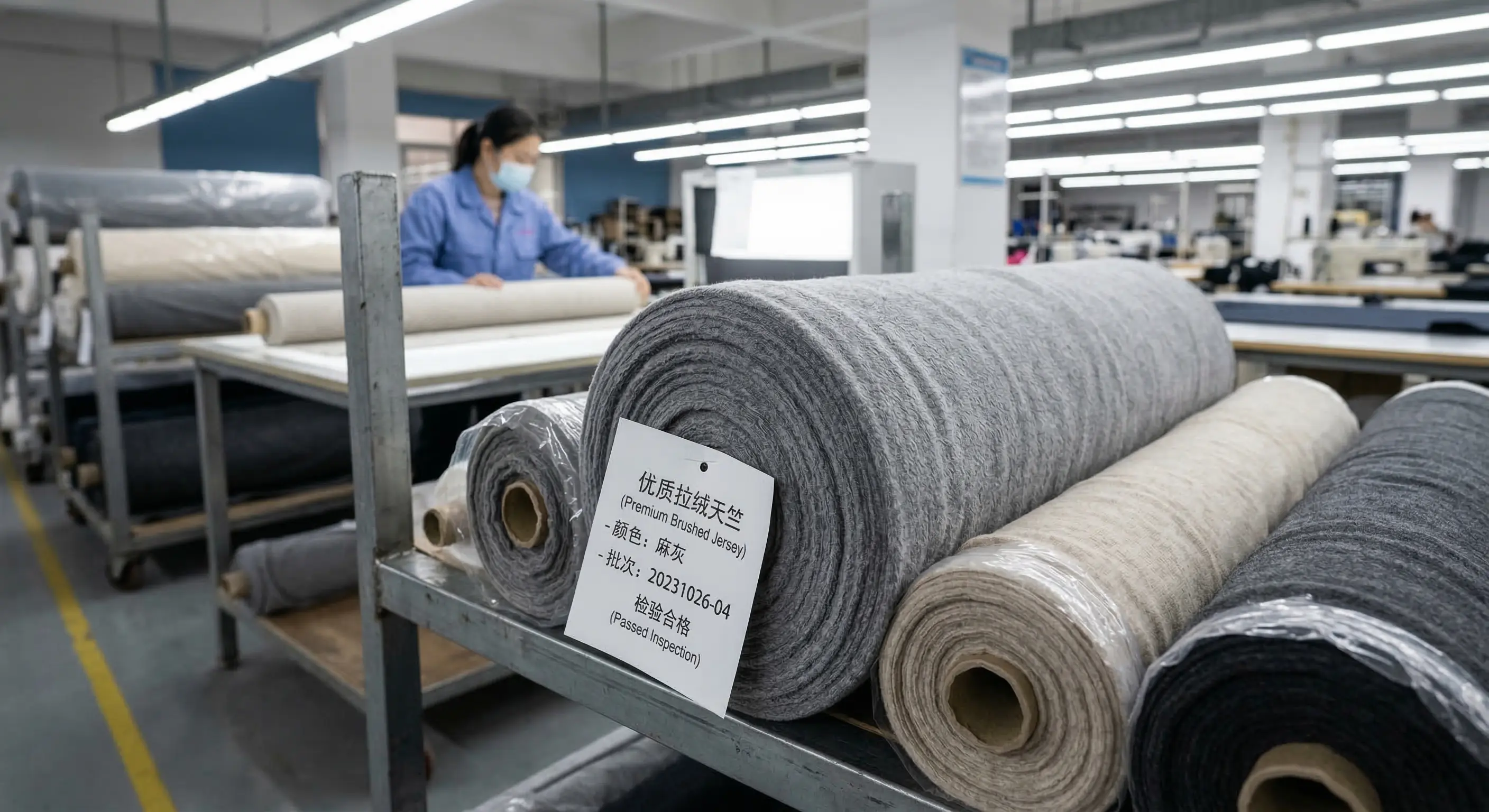
What brushing changes in cotton jersey production
When a buyer asks me for brushed cotton jersey knit fabric, I usually slow the conversation down right away. Not because the fabric is complicated, but because the market uses the word "brushed" too casually. Many suppliers present it as a comfort upgrade and stop there. A serious buyer needs a better answer than that.
Brushing is not a marketing adjective. It is a finishing decision. The mill mechanically lifts a layer of surface fiber from the jersey face, the back, or both sides to create a softer handfeel and a warmer first touch. That sounds simple, but it changes how the fabric behaves in production. Once you raise the surface, you are no longer evaluating only the knit structure underneath. You are evaluating how stable that raised surface stays after cutting, sewing, washing, folding, packing, and repeating across lots.
That is why I do not judge brushed cotton jersey fabric by the sample handfeel alone. A soft sample is easy to make. A soft bulk order that stays clean after wear is much harder. If the brushing is too aggressive, the fabric may feel luxurious on day one and look tired after the first wash cycle. If the base jersey is loose or inconsistent, the raised surface can exaggerate defects instead of hiding them.
For larger-volume programs, I look at brushed jersey in two layers. The first layer is the base construction: yarn quality, knit density, GSM target, width stability, and shrinkage behavior. The second layer is the finish itself: how even the brushing is, how much lint it releases, how quickly the face starts pilling, and whether the handfeel stays consistent from one lot to the next. Buyers who skip the first layer usually end up overpaying for softness that does not last.
This matters most in comfort-led products where touch is doing part of the selling. Loungewear, premium T-shirts, elevated basics, and sleepwear programs often rely on brushed single jersey fabric because it feels warmer and more substantial without moving all the way into fleece territory. That can be the right choice. But if the finish is unstable, the same softness that helps the first sale can create returns, claim discussions, and unpleasant reorder conversations later.
In other words, brushed cotton jersey knit fabric is not just standard jersey plus comfort. It is standard jersey plus finishing risk. Buyers who understand that early usually make better sourcing decisions.
The four risks buyers miss in brushed jersey programs
Surface softness can hide weak construction
The first risk is that brushing can make weak fabric look stronger than it really is. A supplier sends a beautifully soft hanger swatch, and the buyer naturally focuses on touch. What they do not always notice is that the underlying jersey may still be too loose, too unstable, or too inconsistent for the intended program.
The raised surface creates an immediate sense of value. That is useful in retail, but it can be misleading in sourcing. If the knit density is not controlled, the fabric may lose shape faster than expected. If the yarn is too short-staple or the surface fiber is poorly anchored, the fabric can start fuzzing out long before the garment has earned that worn-in look in a good way.
This is one reason I do not separate finish review from base-fabric review. A brushed finish cannot rescue a weak base. It can only disguise it temporarily.
Fiber shedding and lint release are usually under-discussed
The second risk is fiber release. During brushing, loose surface fibers are intentionally lifted. If the process is not balanced and cleaned properly, those fibers keep coming off later in inspection, cutting, sewing, packing, and end use.
That creates problems at several stages. In the cutting room, loose lint can affect surface cleanliness and make darker shades look dusty. In sewing, excess surface fuzz can interfere with edge clarity and neckline appearance. In retail, customers may read early shedding as poor quality even when the base knit is technically acceptable. None of that shows up clearly if the buyer only rubs the sample with one hand and approves it in five minutes.
For comfort programs, especially in black, charcoal, navy, and dusty fashion shades, lint release becomes more visible. A brushed jersey fabric supplier should be able to explain how they control post-brush cleaning and how they evaluate surface stability before shipping. If that answer is vague, the softness you are paying for may turn into avoidable complaints.
Pilling risk increases when the finish is over-sold
The third risk is pilling. I see this misunderstood all the time. Buyers often assume brushed jersey is naturally premium because it feels softer than standard jersey. In reality, the same raised surface that feels premium can also pill faster if the fiber quality, knit compactness, or finishing balance is weak.
Pilling is not only a consumer issue. It is a program issue. Once a brushed cotton jersey fabric starts building pills in high-friction zones like side seams, underarms, sleeve edges, or seat areas, the entire garment looks cheaper. The brand loses the visual benefit that justified the brushed finish in the first place.
This is where soft cotton knit fabric sourcing gets tricky. Some mills push for a very plush sample because they know buyers react to first touch. But an overly open or overly abraded surface can reduce long-term face discipline. The fabric may feel softer on the approval card while becoming less stable after wash, wear, and packing friction. Buyers need to ask not only "How soft is it?" but "How is that softness holding up?"
Handfeel drift between lots is more common than buyers expect
The fourth risk is handfeel inconsistency from lot to lot. This is one of the least visible but most expensive issues in brushed programs.
With standard jersey, buyers can often focus on GSM, width, and shrinkage as the main control points. With brushed cotton jersey fabric, handfeel itself becomes a production variable. Brushing pressure, direction, pass count, machine condition, and finishing sequence all affect the final touch. That means two lots with similar GSM can still feel meaningfully different in the hand.
For repeat programs, that is a serious problem. The buyer may reorder the "same fabric" and receive something slightly flatter, hairier, drier, or warmer. On paper, the fabric still fits the commercial description. In product terms, it no longer feels like the same garment program. This is especially damaging in loungewear and premium basics because touch is part of the identity of the style.
I would put it this way: standard jersey programs usually fail in measurable ways first. Brushed programs often fail in sensory ways first. That does not make the problem smaller. It just makes it easier for weaker suppliers to talk around it.
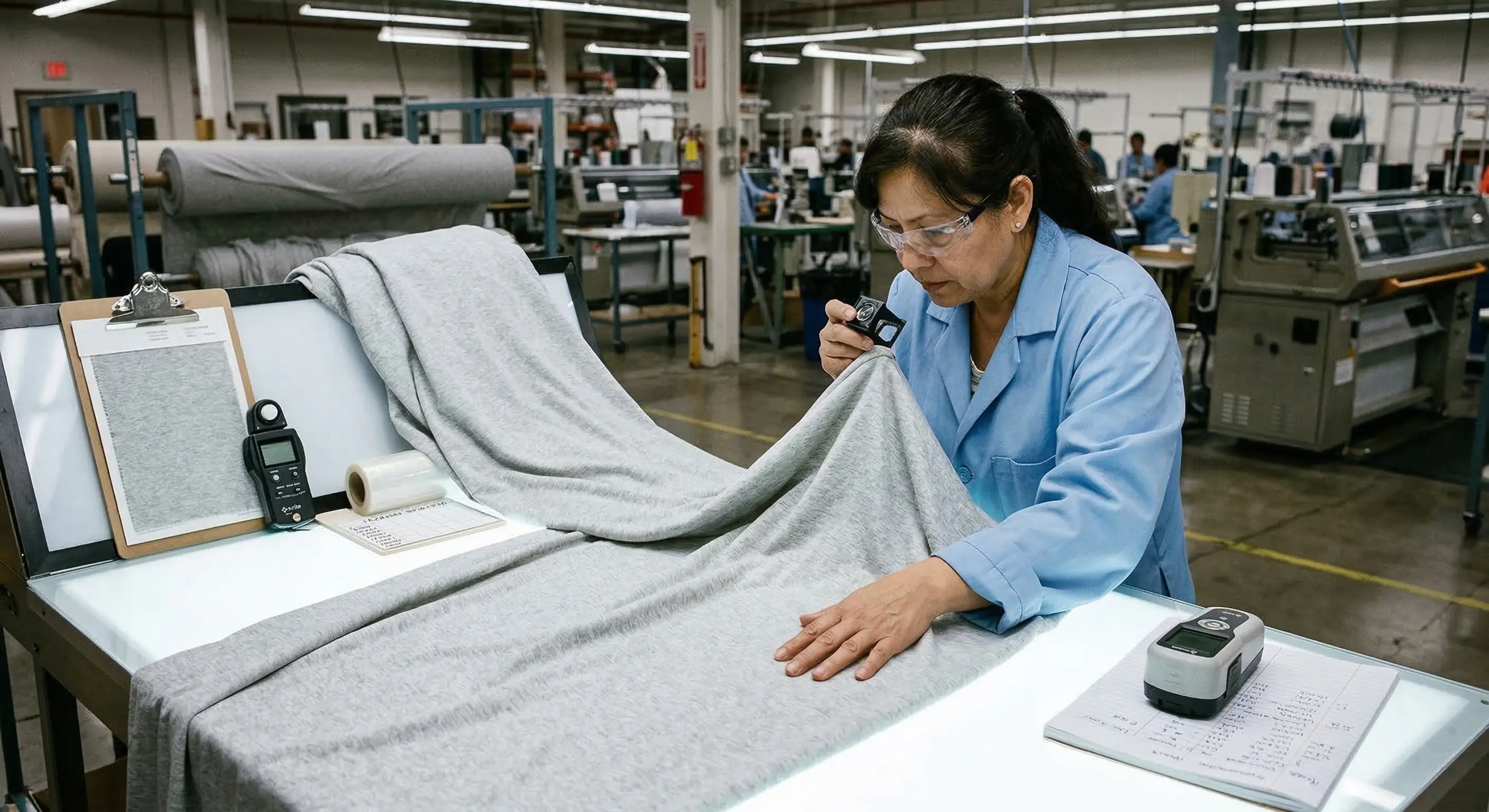
How we evaluate brushed jersey before approving bulk
When I review brushed single jersey fabric for a buyer, I do not start with adjectives like cozy, premium, or elevated. I start with control points.
First, I want clarity on the base construction. That includes composition, target GSM, usable width, yarn direction, and whether the finish is single-side or double-side brushed. If a supplier cannot describe the construction clearly, then the softness is doing too much work in the sales process.
Second, I want the surface treatment defined. How aggressive is the brushing? Is it meant to create a peach-skin touch, a warmer cotton-lift effect, or a heavier comfort finish? These are not the same result. A good supplier should know which feel the program is targeting and how they repeat it.
Third, I want wash stability reviewed before bulk approval. In brushed cotton jersey knit fabric, shrinkage is only part of the story. I also care about what happens to the surface after washing. Does the handfeel flatten too quickly? Does pilling rise fast? Does the face become uneven? Does the shade look cleaner or rougher once the raised fiber settles?
Fourth, I want surface cleanliness checked during inspection. This matters more than buyers sometimes expect. A brushed finish that sheds excessively during handling is already warning you that the finish may be unstable in real use. For dark programs, this should be checked early because lint visibility can become part of the customer experience.
Fifth, I want the sewing behavior considered. Brushed jersey may feel softer, but the raised face can change how clean the garment looks after construction. Necklines, topstitching, and seam edges must still look sharp. If the face becomes too fuzzy around critical seams, the garment loses some of the polish that a premium basics line needs.
This is also where prior sourcing context helps. If your team is deciding between a standard program and a comfort-upgraded one, it helps to compare the fundamentals against 100% cotton jersey knit fabric sourcing basics before paying extra for brushing. The comfort finish only makes sense when the base jersey is already stable enough to support it.
For heavier comfort-led styles, it is also worth comparing against heavyweight cotton jersey programs. Some buyers think they want brushed fabric when what they actually need is more body, not a softer surface. Those are different sourcing decisions, and confusing them usually creates cost without solving the real product problem.
At Fominte, I prefer to approve brushed jersey only when the sample tells a consistent story. The touch, the appearance, the wash behavior, and the sewing result should all support the same product direction. If the sample only wins on touch, I treat that as an incomplete approval, not a successful one.
How to compare suppliers when every sample feels soft
This is where buyers often lose leverage. Every sample feels soft. Every quotation says premium. Every sales rep knows that comfort sells. So the sourcing conversation turns vague very quickly unless the buyer puts structure back into it.
The first question I would ask is how the supplier defines the finish. Are they selling brushed cotton jersey fabric as a broad comfort category, or can they explain the exact effect they are targeting? A supplier who cannot describe the finish clearly is unlikely to repeat it accurately.
The second question is what they check after brushing. Not before. After. Do they review pilling tendency, surface uniformity, lint release, and handfeel stability at that stage? This matters because a base fabric can pass normal jersey checks and still fail the real-world expectations of a brushed program.
The third question is how they control reorders. I ask this because the first sample is the easiest part of the job. Reorders are where supplier discipline shows up. If a buyer is launching a core comfort tee or lounge set, they need to know whether the second and third production lots will still feel like the approved fabric. That depends on process repeatability, not sample-room talent.
The fourth question is whether the supplier understands the final garment use. Brushed jersey for premium sleepwear is not judged the same way as brushed jersey for fashion basics or layered winter tees. The target softness, expected warmth, and acceptable surface behavior change with the end use. A serious brushed jersey fabric supplier should ask those questions early rather than wait for problems later.
The fifth question is what trade-off the supplier is asking you to accept. Every finish has one. You may gain softness but lose some crispness. You may gain warmth but increase pilling risk. You may gain handfeel but reduce reorder tolerance if the finish is not tightly controlled. I trust suppliers more when they can explain the trade-off honestly.
If your product needs more recovery than a pure brushed jersey can offer, you should also compare the option against stretch cotton jersey sourcing logic rather than assuming softness alone will improve wear performance. Handfeel and recovery solve different garment problems. Strong sourcing teams keep those two conversations separate.
I often tell buyers that soft fabric is not a sourcing strategy. It is one product attribute. The real strategy is deciding how much softness you need, how stable it must be, and what process controls you require to keep that result consistent at scale.
When brushed cotton jersey is the right choice, and when it is not
Brushed cotton jersey is a strong choice when the garment needs a warmer first touch, a comfort-led identity, and a slightly more premium emotional appeal than standard jersey can deliver on its own. It works especially well for lounge tops, premium long-sleeve tees, comfort sets, and transitional-season basics where the customer touches the garment and immediately feels the difference.
It also makes sense when the brand story depends on tactile value. Some products do not need dramatic visual structure. They need softness that feels intentional and controlled. In those cases, brushed cotton jersey knit fabric can justify itself if the surface remains clean and stable through normal wear.
But it is not always the right move. If the brand needs a crisp face for clean printing, a very sharp retail presentation, or stronger long-term resistance to surface change, standard jersey may be the better decision. If the product is designed for hot climates, the warmer touch of brushed jersey may actually work against the end use. And if the garment needs stretch recovery more than tactile softness, a different knit path may solve the problem more directly.
I also think some buyers choose brushed jersey because it sounds like an easy premium upgrade. That can be a mistake. The finish should support the actual wearing experience, not just the sample-room moment. If your end customer will benefit more from higher stability, cleaner face definition, or better recovery, then brushing may be adding cost without adding enough real value.
The right question is not "Can you make this softer?" The better question is "What finish gives this garment the right balance of comfort, appearance, wash stability, and repeatability?" Once a buyer asks that question, the sourcing conversation gets much more useful.
A final note for procurement teams
If your team is developing a brushed cotton jersey fabric wholesale program, I would recommend treating the finish approval stage as a risk review, not a feel-good exercise. Ask how the softness is created. Ask what happens to the surface after wash. Ask how pilling risk is checked. Ask whether the second lot will feel like the first. Those answers tell you much more than a beautiful sample card ever will.
The strongest comfort programs are usually built by buyers who stay practical. They appreciate softness, but they do not buy softness alone. They buy control.
If you are evaluating brushed cotton jersey knit fabric for a comfort-led collection, contact us at info@fominte.com. I can have our team share the bulk-approval checkpoints we use for surface stability, pilling control, wash behavior, and repeat-order handfeel before you commit to production.
When to Use & Avoid
Premium loungewear tops
✅ Use When
- comfort-led basics
- sleepwear separates
- transitional long-sleeve tees
⚠️ Avoid When
- high-heat summer basics
- crisp print-surface programs
Soft premium T-shirts
✅ Use When
- elevated cotton tees
- warm-touch basics
- giftable comfort programs
⚠️ Avoid When
- high-recovery active tops
- compression-led styles
Repeat core programs
✅ Use When
- seasonal reorder fabrics
- private label comfort lines
- mid-volume basics
⚠️ Avoid When
- one-time feel-driven approvals
- sample-only decisions
⚡ Common Mistakes to Avoid
Everything You Need to Know
Conclusion