.png?w=970&h=250)
Engineering Men's Outdoor Fleece Apparel: DWR Coatings and Anti-Abrasion Zones
What It Really Means
We process thousands of yards of fleece every month at Fominte for outdoor and activewear brands. When buyers transition from lifestyle apparel to technical gear, they often learn a hard truth: standard fleece acts like a sponge in the rain and pills heavily under the friction of a hiking backpack.
If you want to sell men's outdoor fleece apparel at a premium price point, you cannot rely on basic polyester knits. A true performance garment requires chemical weatherproofing and structural reinforcement before it reaches the sewing line.
Here is the exact production roadmap a technical mens outdoor fleece apparel manufacturer uses to build jackets that survive the mountains.
From Sponge to Shield: Applying DWR as a Performance Fleece Factory
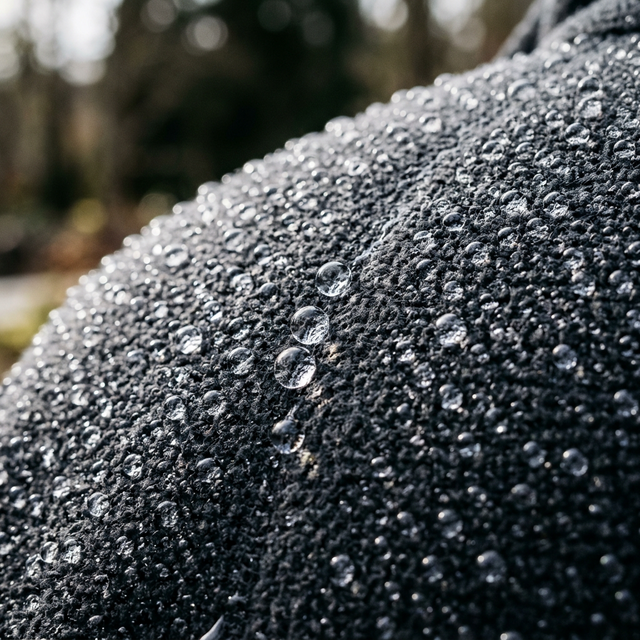
Untreated fleece absorbs water instantly. To make it viable for outdoor use, we apply a Durable Water Repellent (DWR) coating. This chemical treatment lowers the surface tension of the fabric, forcing water droplets to bead up and roll off rather than soaking into the fibers.
As a certified performance fleece factory, we use a controlled padding process to apply C0 (fluorine-free) DWR. The fleece passes through a chemical bath and is immediately squeezed through heavy industrial rollers. This forces the DWR compound deep into the fiber matrix. The fabric then enters a stenter frame where high heat cures the chemical, locking the water-repellent properties into the polyester.
C0 treatments are eco-friendly and meet strict European chemical regulations. While older C8 fluorocarbon treatments lasted longer, they are now banned in most major markets. We engineer our C0 applications to maintain an 80/20 rating—meaning the garment retains 80% of its original water repellency after 20 commercial wash cycles.
Anti-Abrasion Zones: Extending the Lifespan of Outdoor Gear
Fleece is a knit fabric with exposed surface fibers. When a hiker wears a 40-pound backpack, the constant friction of the shoulder straps and the hip belt will destroy those fibers within hours. The fabric pills, thins out, and eventually tears.
A reliable outdoor fleece clothing supplier prevents this by integrating woven nylon or taslan overlays into high-friction zones. We reinforce the shoulders, elbows, and pocket entries. Because woven fabrics lack the exposed loops of a knit fleece, they absorb the abrasion without pilling.
The challenge is attaching a stiff woven nylon patch to a stretchy, thick fleece body without creating a bulky, stiff seam. We use specific grade-and-trim methods. Our sewing operators shear the fleece pile down to 2mm strictly within the seam allowance before attaching the nylon overlay. This removes the bulk, allowing the seam to sit flat against the wearer's skin while maintaining the reinforced exterior.
The Breathability Compromise in Mens Active Fleece
Adding DWR coatings and nylon patches increases weather resistance, but it creates a new problem: it traps sweat. For high-output activities like climbing or trail running, breathability is non-negotiable.
When developing a mens active fleece wholesale program, we solve this through zonal mapping. We do not coat the entire garment blindly. We apply heavy DWR and wind-blocking membranes to the chest and shoulders—the areas exposed to direct weather. We leave the underarm panels and back vents as untreated, lighter-weight grid fleece. Grid fleece features channels knit directly into the fabric, allowing trapped body heat and moisture vapor to escape rapidly.
This hybrid construction requires precise pattern making and distinct cutting parameters for each fabric type, but it delivers the exact balance of protection and ventilation outdoor consumers demand.
Source Your Technical Fleece with Confidence
Transitioning into performance outdoor gear requires a factory that understands chemical finishing and hybrid fabric construction. If your current supplier is just cutting and sewing basic polar fleece, your product will fail in the field. Send your tech pack to Fominte. Our team will review your abrasion points, recommend the correct DWR formulation, and build a sample that performs.
⚡ Common Mistakes to Avoid
Everything You Need to Know
Conclusion