.png?w=970&h=250)
Inside Fominte's Production Floor: 27 Machines, 300,000 Meters Monthly, and the Team Behind It
What It Really Means
What Equipment Do We Run?
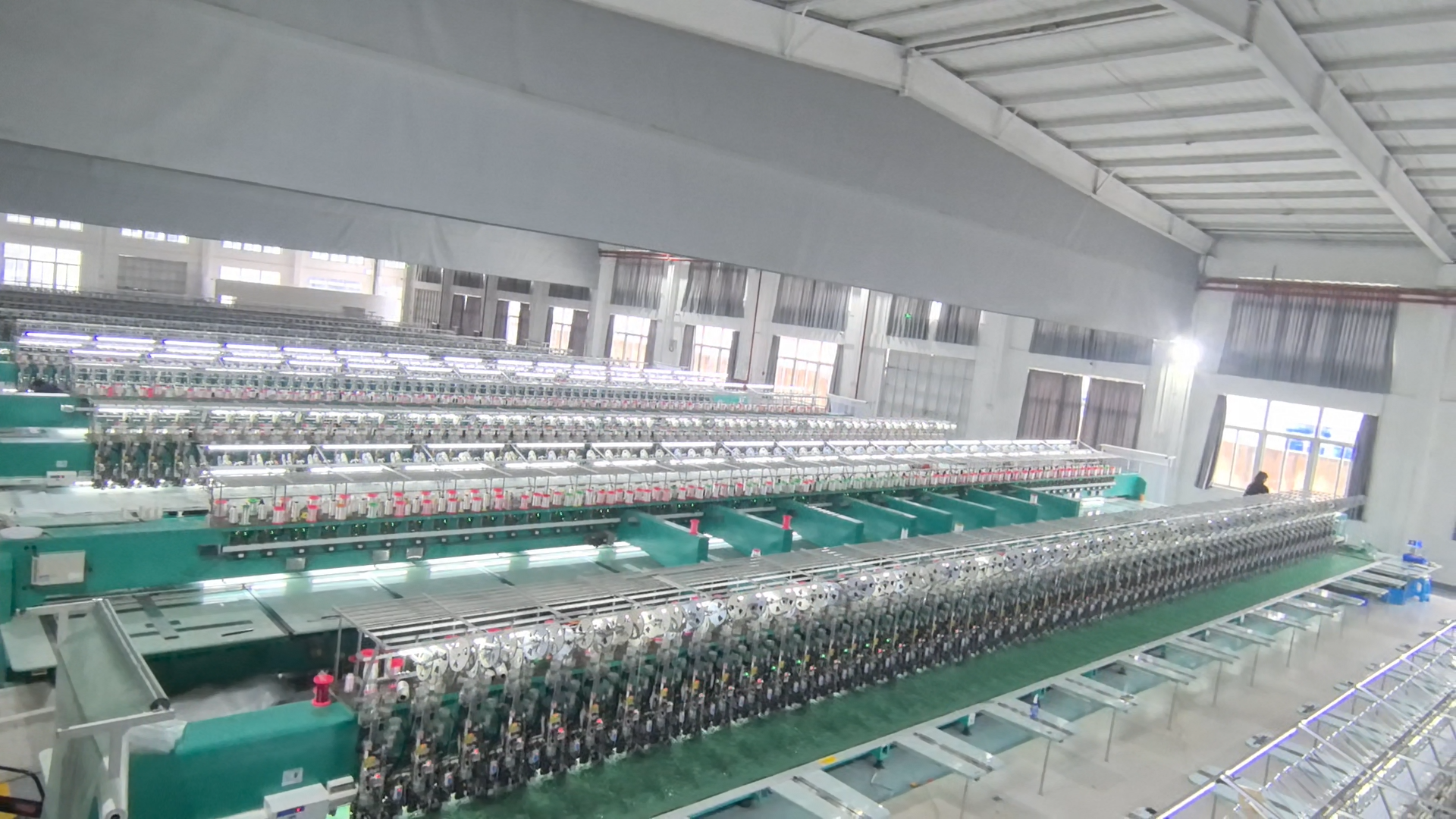
Fominte operates 27 embroidery machines on our production floor. Each machine runs 62 heads with a 6-needle configuration. (If you want the full picture of what these machines produce, our embroidery product range overview covers every technique we offer.)
If you're not deep into embroidery manufacturing, those numbers might not mean much. Here's the translation: 62 heads means each machine can embroider 62 separate fabric panels simultaneously. When a buyer sends us a 30,000-yard order for mesh embroidery lace, we're not stitching it one piece at a time. Multiple machines run in parallel, each handling dozens of panels per cycle.
The 6-needle setup matters for design flexibility. It allows us to work with up to 6 thread colors in a single pass without stopping the machine for thread changes. For most commercial embroidery patterns, that's enough to handle multi-color designs efficiently. More complex color work (10+ colors) requires additional setup time, but the base configuration covers the majority of wholesale orders we receive.
We don't publicly name our machine suppliers. What I can tell you is that our equipment is serviced on a preventive maintenance schedule, not a "fix it when it breaks" schedule. Our technicians run calibration checks on tension, needle alignment, and bobbin systems at regular intervals. Downtime from unexpected breakdowns is one of the fastest ways to blow a delivery deadline, so we invest in prevention.
How Much Can We Produce?
At full capacity, our factory produces up to 300,000 meters of embroidered fabric per month.
That number comes with context. "Full capacity" means all 27 machines running standard mesh embroidery on a repeatable pattern. Actual output varies by technique:
- Mesh embroidery is our highest-volume process. The base fabric is consistent, the digitizing is straightforward, and the machines can run with minimal intervention. This is where we hit that 300,000-meter ceiling.
- Water-soluble embroidery runs slower. The dissolvable backing requires tighter tension control, and the stitching density is typically higher to achieve that floating lace effect. (We go deeper on this process in our water-soluble embroidery capability guide.) We can produce water-soluble work at widths up to 1.4 meters with stitch counts reaching 400,000 stitches per piece, but the throughput per machine is lower than mesh.
- Sequin and bead embroidery is slower. Each sequin or bead is applied individually by the machine, which means the head speed drops. We can work with sequins up to 18mm (for edge-hole flat sequins) and smaller ones at 8mm or below, with up to 10 different colors on a single fabric. But the production pace is measured differently than standard thread embroidery.
For a typical wholesale order, here's how the production timeline breaks down:
| Stage | Time |
|---|---|
| Digitizing (custom designs) | 2-3 days |
| Raw material sourcing | 3-5 days |
| Production setup | 1-2 days |
| Actual embroidery | 5-15 days (depends on volume) |
| Quality inspection | 1-2 days |
| Finishing and packing | 2-3 days |
That puts our standard lead time at 20-40 days from order confirmation to shipment. (For a step-by-step look at how a typical order moves through our factory, see how we make embroidery fabric.) The range depends on order size, technique complexity, and whether we need to source specialty materials like sequins or specific thread colors.
One thing buyers often miscalculate: the digitizing stage. A complex pattern that looks simple visually might require 3-4 days of digitizing work to get the stitch path right. We've seen orders delayed because buyers assumed the design phase was trivial. It's not. Our digitizing team of 10 people handles this full-time, and they're the ones who determine whether your pattern will run cleanly at production speed or cause constant thread breaks on the floor.
Who Runs the Floor?
Our production team fluctuates between 100 and 200 people depending on order volume. During peak seasons, we bring in additional trained operators to handle the surge. During slower periods, the core team focuses on equipment maintenance, sample development, and process optimization.
But machines and headcounts only tell you so much. The people running them matter more.
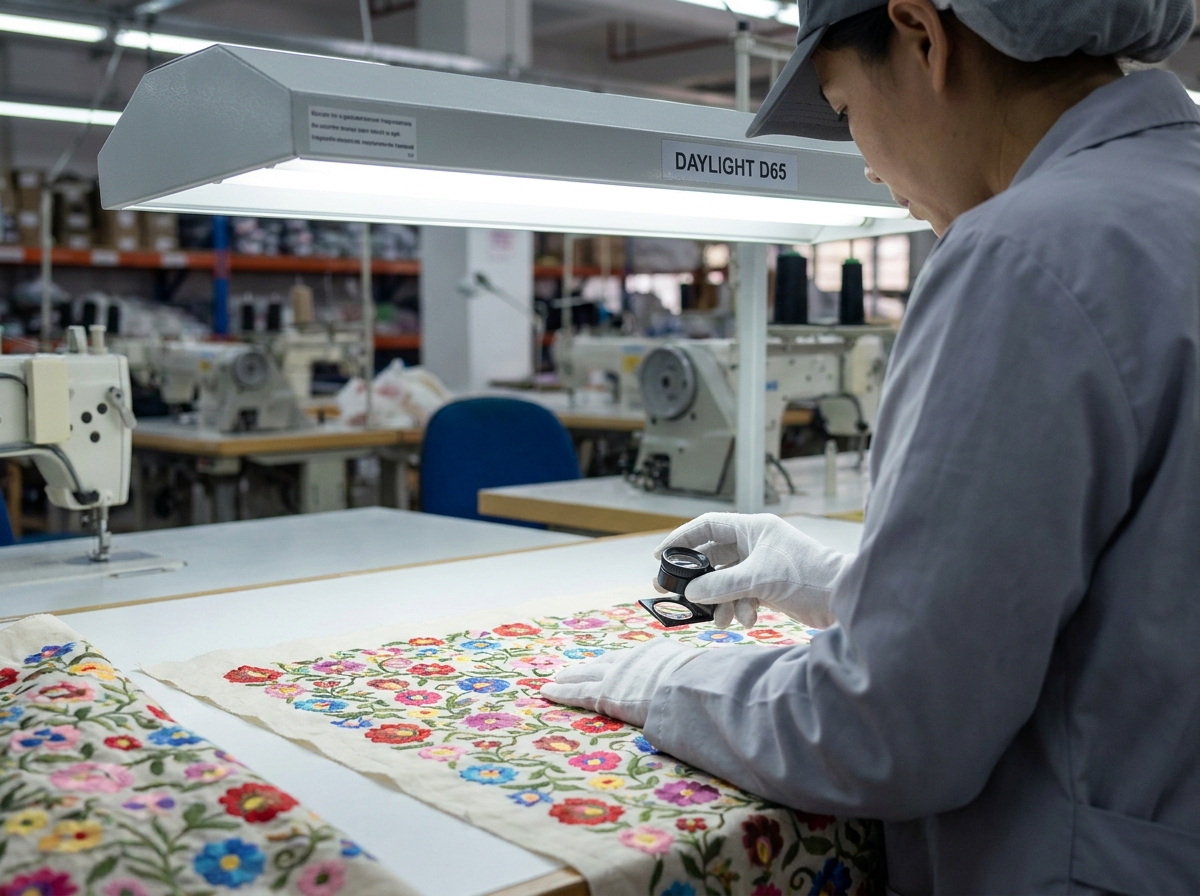
Shawn Wang, our founder, started his career as a quality control inspector in a textile factory in the early 1990s. He's told me more than once: "The first thing I learned as an inspector was that rework is the real waste." That experience shaped how Fominte operates. We don't build quality checkpoints at the end of the line. We build them into every stage, starting from raw material inspection.
Our lead embroidery technician has over 30 years of experience with embroidery machines. He's handled more digitizing files than most people in this industry will see in a lifetime. His core belief: "The digitizing file is the blueprint. If the blueprint is wrong, no amount of skilled machine operation can fix it." That's why our digitizing review process rejects about 15% of files on first submission. Not because clients gave us bad designs, but because the stitch path needs adjustment for production efficiency.
Our design team of 10 people does more than just digitizing. They work with buyers to optimize patterns before production starts. Sometimes that means simplifying a complex motif to reduce stitch count (and cost) without losing the visual impact. Sometimes it means suggesting a different embroidery technique that achieves a similar result at a better price point. Last quarter, one buyer's design had 180,000 stitches that our team optimized down to 110,000. Same visual result, roughly 35% lower production cost.
What Does This Mean for Your Order?
Factory data is useful. But what you really want to know is: can we handle your specific order?
Here's how to think about it:
If you're ordering 10,000-50,000 yards of mesh embroidery: This is well within our standard capacity. We can schedule production within 1-2 weeks of order confirmation and deliver within the 20-30 day range. Batch consistency is maintained through our inline inspection process. Our defect rate stays below 2%, which we track per production run, not averaged across all orders.
If you need water-soluble lace at volume: We can handle it, but plan for the longer end of our lead time range. The process is more sensitive to environmental conditions (humidity affects the backing material), and our QC team runs additional checks on dissolvability and stitch density. Maximum width is 1.4 meters.
If your order involves sequins, beads, or mixed techniques: These require more setup time and slower machine speeds. We recommend placing these orders 2-3 weeks earlier than you would for standard thread embroidery. Sequin placement accuracy and bead adhesion are areas where cutting corners shows immediately. One misplaced sequin in a repeating pattern is visible from three feet away.
If you're planning recurring orders: This is where our scale works best. Buyers who commit to regular quarterly or seasonal orders get priority scheduling. We can dedicate specific machines to your patterns, which reduces setup time on repeat runs and improves consistency across batches.
One practical note: our export shipments go through Shanghai port, and we serve buyers in the Middle East, Europe, the US, and Southeast Asia. If you need compliance documentation (we hold OEKO-TEX Standard 100, Higg Index, and Amfori certifications), we provide those with every shipment, not just on request.
FAQ
How do I know your capacity claims are real?
We welcome factory audits, in-person or virtual. You can schedule a facility tour through info@fominte.com. We'll show you the production floor, the QC stations, and the raw material warehouse. We also provide references from existing long-term clients (with their permission) who can speak to our delivery consistency.
Can you handle rush orders alongside existing production?
It depends on the current production schedule and the order specifications. We maintain a buffer of about 10-15% flexible capacity for urgent requests from existing clients. For new clients with rush needs, we evaluate case by case. The honest answer: if we can't deliver on time, we'll tell you upfront rather than overpromise and miss the deadline.
What's your monthly capacity per embroidery technique?
Mesh embroidery accounts for roughly 60-70% of our total output, which puts it at approximately 180,000-210,000 meters per month. Water-soluble embroidery runs at about 60,000-80,000 meters monthly. Sequin, bead, and specialty work accounts for the remaining capacity, measured more by piece complexity than pure linear meters. These figures shift seasonally based on order mix.
When to Use & Avoid
Large-volume mesh embroidery orders (10,000-50,000 yards)
✅ Use When
- standard mesh production, 20-30 day delivery, inline QC
full capacity scheduling within 1-2 weeks
✅ Use When
- orders requiring 10+ thread colors without prior consultation
- orders with unreviewed digitizing files
Water-soluble lace at volume
✅ Use When
- dedicated production lines, tighter tension control, dissolvability testing
Sequin, bead, or mixed-technique orders
✅ Use When
- specialty embellishment production, 2-3 weeks additional lead time
Recurring quarterly or seasonal orders
✅ Use When
- priority scheduling, dedicated machine allocation, reduced setup on repeat runs
⚡ Common Mistakes to Avoid
Everything You Need to Know
Conclusion