.png?w=970&h=250)
From Sketch to Physical Sample: The 7–10 Day Prototyping Guide for Custom Jacquard Fleece & Faux Fur
What It Really Means
The Prototyping Friction: Why Complex Outerwear Samples Fail
In garment manufacturing, there is an unspoken truth about sampling: basic jersey crewnecks and cotton t-shirts can forgive sloppy specifications; textured outerwear will not.
When a brand submits a tech pack for a basic black hoodie, a sample machinist can assemble the pieces with minimal ambiguity. But the moment you enter the world of yarn-dyed jacquard polar fleece and high-density faux fur, every millimeter of mechanical misalignment becomes visible.
Over the years in our Xuzhou factory sample room, we have seen dozens of promising designs stalled by the same recurring mistakes. A founder sends a flat vector illustration of an intricate Aztec fleece jacket, expecting a pristine prototype. Three weeks later, they receive a garment where the horizontal patterns on the left chest sit two centimeters higher than the right chest across the front zipper. Or an independent label orders a cropped faux fur jacket, only to receive a sample with fur hairs permanently trapped under the collar seam, causing the neckline to twist and pucker.
These failures rarely happen because the sewing machinists lack skill. They happen because there is a communication disconnect between the brand's digital design file and the physical realities of cut-and-sew pile textiles.
If you are developing a hero outerwear piece for an upcoming seasonal release, you cannot afford a six-week, three-round sampling loop. This guide breaks down the precise engineering details your tech pack must specify, how our workshop executes physical prototypes in 7 to 10 working days, and how our commercial sample credit policy protects your development budget.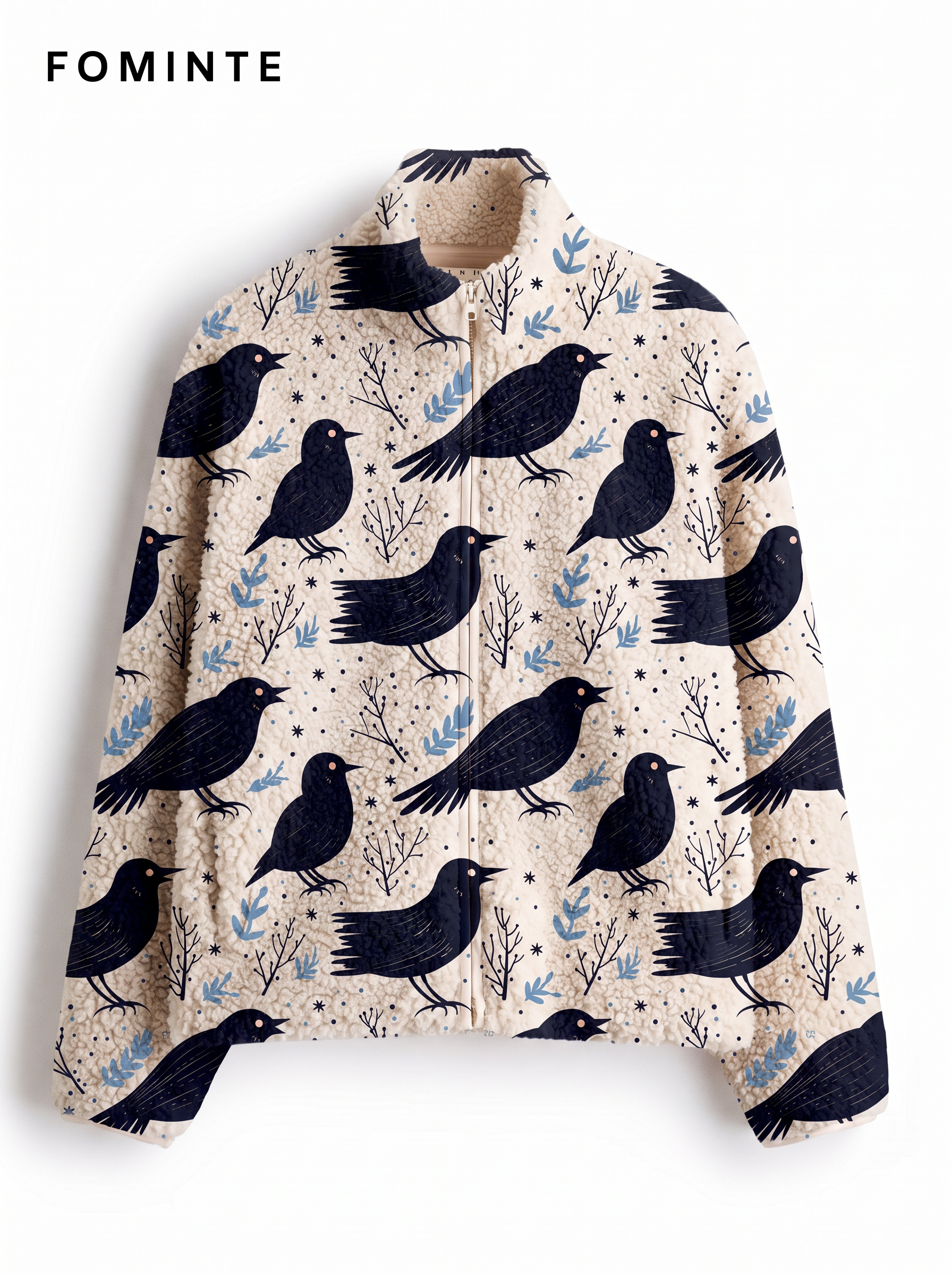
The Jacquard Fleece Spec Sheet: What Your Tech Pack Must Specify
When developing a patterned fleece jacket, many emerging brands simply attach an artwork file and assume the factory's automated fabric cutter will handle the rest. On industrial production lines, this assumption guarantees pattern distortion.
Jacquard polar fleece is a knitted, brushed fabric with directional pile and mechanical crosswise elasticity. To ensure your first physical sample matches your design vision, your technical package must define four critical structural checkpoints:
1. The Repeat Geometry and Horizontal Alignment Baseline
Every jacquard motif has a vertical repeat (the height of one complete pattern cycle in centimeters) and a horizontal repeat.
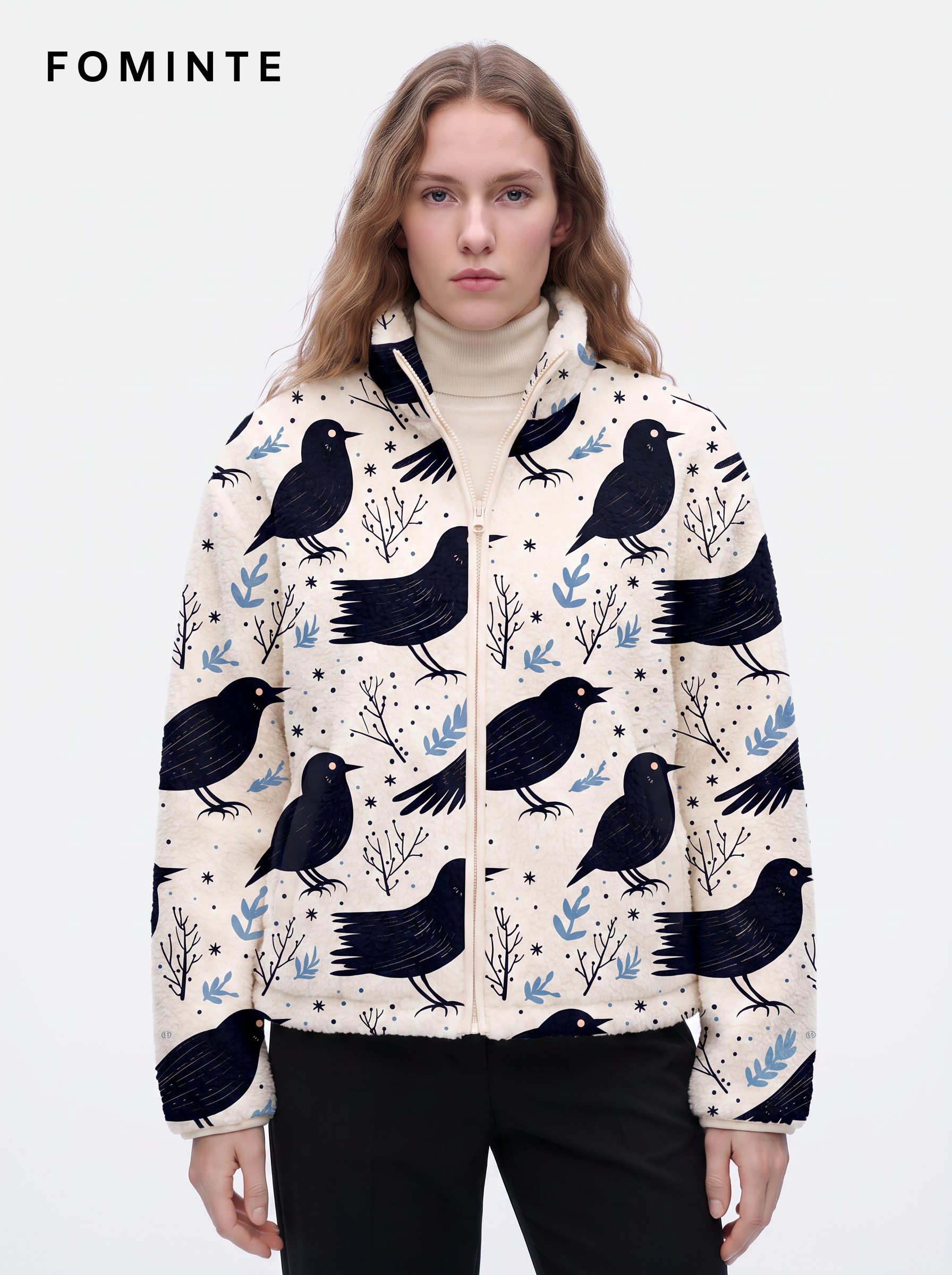
In your tech pack, you must establish the Horizontal Anchor Line. This is the specific horizontal band of the pattern that must align perfectly across the center-front zipper closure, the side seams, and the sleeve-to-body joins.
| Garment Zone | Left Panel Motif | Center Zipper State | Right Panel Motif | Alignment Tolerance |
|---|---|---|---|---|
| Upper Chest | Row A: Cream Diamonds | Continuous Teeth Line | Row A: Cream Diamonds | Mandatory 0 mm deviation |
| Mid Chest | Row B: Charcoal Pines | Continuous Teeth Line | Row B: Charcoal Pines | Mandatory 0 mm deviation |
| Lower Body | Row C: Solid Baseline | Bottom Stop & Puller | Row C: Solid Baseline | Pocket top cut boundary |
If your tech pack leaves this unspecified, the cutting technician will nest the pattern pieces purely for maximum fabric yield, resulting in a jacket where the diamond motif breaks jaggedly across the center chest. For a deeper look at the knitting mechanics, review our technical guide on how yarn-dyed jacquard fleece is built into the knit.
2. Grain Direction and Pile Orientation (The Nap)
Polar fleece fibers do not sit vertically perpendicular to the base knit; they have a natural directional angle created during the rotary wire brushing and shearing processes. In the garment trade, this is called the "nap."
Your specification sheet must state: "All pattern pieces (front body, back body, two-piece sleeves, outer collar) must be cut with pile brushing downwards."
If a careless pattern room cuts one sleeve upside-down relative to the body panel to save 15 centimeters of fabric, that sleeve will appear a completely different shade of color under natural lighting due to light refraction off the pile tips. Furthermore, when the wearer rubs their hand downwards over the jacket, one arm will feel smooth while the other feels rough and resistant.
3. Pocket Interfacing and Pattern Interruption
Heavyweight jacquard fleeces (typically 320 to 360 GSM) are substantial. If you place a patch chest pocket cut from the identical jacquard fleece directly over the patterned body panel, the visual effect becomes cluttered, and the seam thickness at the pocket corners jumps to over 8 millimeters, causing household needle breakage or bulky stitching.
We recommend one of two engineering solutions in your spec sheet:
- Contrast Woven Overlay: Utilize a lightweight 120 GSM nylon taslan or polyester ripstop for chest and waist pocket welts. This introduces functional streetwear texture blocking while eliminating seam bulk.
- Matched Hidden In-Seam Pockets: Integrate deep handwarmer pockets into the side structural seams, keeping the exterior jacquard motif unbroken.
Faux Fur Engineering: Pile Direction, Seam Combing, and Backing Stability
Sourcing custom faux fur outerwear presents an entirely different set of technical challenges. Unlike woven wool or dense fleece, high-density faux fur (400 to 550 GSM with pile lengths from 12 mm to 25 mm) behaves like a living material on the cutting and sewing floor.
If you are drafting a tech pack for a faux fur coat or plush bomber, your factory partner must adhere to three non-negotiable assembly standards:
1. Specialized Knife Cutting from the Reverse Base
Faux fur must never be cut using conventional vertical electric fabric saws or automated laser cutters. A laser will melt the synthetic polyester/acrylic fiber tips into hard, scratchy plastic beads, while a rotary blade will slice through the fur hairs, creating a blunt, jagged edge that sheds profusely.
In our sampling room, our technicians cut every faux fur panel by hand from the reverse knitted backing using specialized angled surgical-style scalpel blades. The blade cuts only the base knit grid without severing the long fur tufts hanging on the face side. This preserves the natural, feathered edge of the fur along every single pattern contour.
2. Manual Seam Combing (Releasing Trapped Pile)
When two fur panels are joined together on a heavy-duty 4-thread overlock machine, the sewing foot inevitably presses thousands of surface fur hairs flat into the seam channel. If the sample maker simply irons the jacket and ships it, the exterior seam will look like an unnatural, bald groove.
Our standard protocol requires the sample artisan to execute manual seam picking and needle combing immediately after stitching. Using a blunt steel bodkin, the technician gently teases the trapped fur fibers out of the interior stitch line, allowing the long pile to naturally drape over and conceal the join. When done correctly, the exterior seams of the finished coat become completely invisible.
| Seam Execution State | Internal Fiber Architecture | Exterior Visual & Tactile Result | Brand Risk & Defect Impact |
|---|---|---|---|
| Uncombed Seam (Standard Trade Shortcut) | Long fur fibers remain pinched and crushed inside the 4-thread overlock channel | An unnatural, recessed "bald" groove visible along collar and shoulder joins | Garment looks cheap and reveals knit backing; triggers customer returns |
| Combed Seam (FOMINTE Workshop Standard) | Trapped fibers teased out using manual bodkin needles before final steam finishing | Exterior fur pile feathers naturally across the stitch line, making seams 100% invisible | Seamless luxury fur contour; justifies $180–$260 boutique retail positioning |
3. Fusible Knit Interfacing for Structural Hardware
Faux fur knit backings have natural horizontal give. If you sew a heavy metal front zipper directly onto raw faux fur backing, the weight of the zipper combined with the stretch of the knit will cause the zipper tape to buckle into an unsightly wavy "snake" shape when closed.
Your tech pack should mandate 1.5-inch micro-dot fusible knitted interfacing applied along the entire center-front placket and the pocket welts. This provides dimensional stabilization without stiffening the overall drape of the garment. For advice on preparing comprehensive specification packages, consult our guide to custom jacquard fleece tech pack requirements.
Inside the Sample Room: The 7–10 Day Prototyping Calendar
The single greatest source of frustration for brand founders is the opacity of the traditional factory timeline. You send a deposit, and your project vanishes into a black box for four weeks.
At FOMINTE, our sampling division operates as an open, agile engineering cell. Because we maintain our own in-house design lab in Shenzhen and self-owned apparel manufacturing base in Xuzhou, we eliminate third-party brokerage delays.
Here is exactly what happens to your design across each day of our 7 to 10-day prototyping window:
Days 1–2: Digital Ingestion, Shrinkage Audit & Fabric Allocation
- Chief Pattern Maker Review: Our master pattern engineer reviews your dimension sheet, grading rules, and vector graphics. If we spot an engineering issue—such as an unworkable pocket radius or mismatched sleeve pitch—we flag it with markup sketches within 24 hours.
- Warehouse Pull: Fabric rolls are pulled directly from our active stock of tested yarn-dyed jacquards (Fair Isle, Aztec, topographic, houndstooth) or premium high-density faux furs.
- Thermal Pre-Relaxation: The fabric is unrolled and allowed to rest on tension-free aeration tables for 24 hours to relieve internal knitting stress before precision measuring.
Days 3–5: CAD Pattern Drafting & Hand-Guided Master Cutting
- CAD Digitization: Your measurements are converted into industrial CAD pattern blocks, accounting for exact fabric shrinkage (tested under ISO 6330 laundering standards).
- Motif Positioning: The pattern engineer aligns the front chest horizontal motif repeat against the center zipper CAD line.
- Individual Panel Cutting: Each pattern piece is individually cut by hand with pile grain alignment strictly verified.
Days 6–8: Dedicated Sample Artisan Assembly
- Specialist Machinists: Outerwear samples are not sewn on a high-speed production line; they are assigned to senior artisans who specialize exclusively in thick-pile tailoring.
- Interior Binding Execution: All interior raw seam allowances are wrapped in clean cotton twill or satin binding tape. No exposed overlock fuzz.
- Hardware Integration: High-grade zippers (such as YKK #5 molded vislon or antique metal teeth), elastic hem drawcords, and custom-positioned chest pocketing are installed.
Days 9–10: Dimensional QC, 100% Needle Detection & Global Dispatch
- Full Spec Inspection: The garment is placed on an inspection table and measured against your 12 core tolerance points (chest, sleeve, back length, collar height, cuff opening).
- Calibrated Needle Inspection: Thick pile outerwear can conceal broken sewing needle fragments. Every sample passes through our dual-head conveyor needle detector to guarantee 100% metal-free safety.
- Courier Hand-Off: Packed in protective eco-polybags and handed to DHL or FedEx Express with full door-to-door tracking (typical 3 to 5 business day transit to the US and Europe).
Sample Economics: Fees, Commercial Terms, and the 100% Credit-Back Rule
New brand partners often ask why garment sampling carries an upfront development charge. In the garment industry, making a single, custom prototype requires pattern programming, CAD plotting, single-panel cutting, and dedicated artisan labor that takes a senior machinist an entire day.
To provide total commercial transparency, here is how our prototyping financials work:
Prototype Development Cost Inclusions
- Pattern Engineering & CAD Digitization: Custom digital grade rules, shrinkage compensation, and marker generation.
- Precision Artisan Labor: Dedicated master cut-and-sew time in our agile sampling workshop.
- Fabric & Trim Allocation: High-grade yarn-dyed jacquard or faux fur pulled directly from warehouse stock.
- Standard Pricing Benchmark: Typically 2.0x to 3.0x bulk FOB unit price to cover single-piece line calibration.
The FOMINTE 100% Credit-Back Framework
- Step 1 (Workshop Slot Reservation): You submit your tech pack and pay the nominal prototyping fee to lock in your 7–10 day workshop slot.
- Step 2 (Fit & Quality Inspection): You receive and approve your physical prototype sample in hand.
- Step 3 (Full Invoice Credit-Back): When you confirm your initial production run (including our flexible 100-piece trial orders), 100% of your sample development fee is credited back directly against your bulk production invoice.
Under this framework, your sample development effectively becomes free once you move into commercial production. We do not treat sampling as a profit center; we treat it as an engineering investment into an enduring manufacturing partnership.
Furthermore, we respect design ownership. If you provide a proprietary custom jacquard motif or an exclusive silhouette, your technical files and pattern blocks remain strictly confidential under our standard factory Non-Disclosure Agreement (NDA). We never display a client's private label tech pack or unreleased seasonal lookbook without explicit authorization.
Production Handoff: From Approved Sample to 100-Piece Trial Run
Receiving your approved physical sample is not the end of the development journey; it is the commercial launchpad.
The biggest advantage of prototyping directly with a self-owned apparel manufacturer rather than an independent agency is that your sample pattern block is already production-ready.
In traditional sourcing, if an agency makes your sample, you must transfer the patterns to a separate production factory, which often requires re-grading, re-sampling, and another month of lost time. At FOMINTE:
- Identical Machinery: The overlock tensions, seam allowances, and needle gauges calibrated for your prototype are identical to the machines running on our primary Xuzhou workshop floor.
- Instant CAD Grading: The moment you greenlight the fit, our pattern software generates the complete size nesting (XS to 3XL) based on your calibrated grade rules in minutes.
- Agile 100-Piece Trial Execution: Because the fabric base is pre-tested and the pattern block is locked, you can trigger a 100 to 300-piece trial production run with complete confidence that the bulk shipment will match your approved sample stitch-for-stitch. For a strategic comparison of production routes, see our analysis of yarn-dyed jacquard versus printed fleece trade-offs.
How to Start Your Prototyping Run (The RFQ Blueprint)
If you have a design in hand and need to move from digital concepts into physical showroom samples without wasting weeks of development time, our engineering team is ready to review your files.
Here is the straightforward checklist to submit your project:
- Your Spec Sheet or Reference Garment: Provide flat sketches with core measurements. If you do not have a complete tech pack, you can courier a physical vintage or reference jacket for our pattern team to digitally deconstruct.
- Artwork or Motif Vector: Provide vector files (.AI, .PDF) with Pantone TCX color references. If selecting from our in-stock jacquard designs, specify your desired color palette.
- Trims & Hardware Vision: Detail your zipper finishes, neck label placements, and embroidery or patch preferences.
Within 24 hours of receiving your files, our engineering desk will return a clear technical assessment, fabric swatch options, and a confirmed 7–10 day sample delivery schedule.
Ready to inspect our fabric textures or put your tech pack on our cutting table?
👉 Submit Your Tech Pack to Our Engineering Team
👉 Review Our End-to-End OEM / ODM Factory Capabilities
👉 Instant Communication: Click the floating WhatsApp button at the bottom right of your screen to speak directly with our workshop desk in real time.
Step-by-Step Guide
Digital Ingestion & Engineering Review
CAD Grading & Precision Pattern Cutting
Specialist Artisan Seam Assembly
Dimensional QA, Needle Inspection & Dispatch
When to Use & Avoid
DTC Brand Aztec / Fair Isle Fleece
✅ Use When
- Yarn-Dyed Jacquard Full-Zip Jacket
- In-stock jacquard library with horizontal zipper alignment
- 7–10 business days
- 100–150 pcs trial order with 100% sample fee credited
⚠️ Avoid When
- Relying on automatic rotary cutting without manual motif alignment
Boutique Plush Fur Drop
✅ Use When
- High-Density Faux Fur Bomber / Coat
- Reverse-cut micro-acrylic plush with combed seams
- 7–10 business days
- 100–200 pcs trial run with custom satin linings
⚠️ Avoid When
- Sewing heavy zippers directly onto stretchy raw fur backings
Corporate Executive Winter Outerwear
✅ Use When
- Custom Technical Jacquard Fleece
- Contrast taslan chest pocket with high-density logo embroidery
- 7–10 business days
- 150–300 pcs corporate order with custom zip pullers
⚠️ Avoid When
- Using generic blanks with off-the-shelf printed patches
Emerging Designer Fashion Show Piece
✅ Use When
- Complex Multi-Panel Fur & Jacquard Coat
- Hybrid construction with dedicated pattern master consultation
- 10–14 business days
- Small bespoke production run under strict factory NDA
⚠️ Avoid When
- Outsourcing to trading middlemen with no direct sample room
Comparison
| Development Dimension | Traditional Trading Broker / External Mill | FOMINTE Dedicated In-House Prototyping Cell |
| Turnaround Lead Time | 4 to 6 weeks (outsourced to third-party pattern rooms) | 7 to 10 working days (in-house pattern makers & sample line) |
| Motif Alignment Control | Randomized cutting based on yield; frequent zipper misalignment | Strict CAD-anchored horizontal repeat matching across zippers and seams |
| Faux Fur Seam Execution | Standard overlock sewing; trapped fur creates visible bald seams | Manual bodkin seam combing and reverse scalpel hand cutting |
| Sample Fee Policy | High non-refundable fees treated as standalone profit center | 100% of sample fee credited back upon bulk order confirmation |
| Design Confidentiality | Risk of design leakage across shared broker networks | Strict factory NDA; proprietary CAD files remain private property |
| Production Scalability | Sample must be re-graded and re-tested by a second production mill | Sample block is 100% production-ready for immediate 100-piece trial runs |
⚡ Common Mistakes to Avoid
Everything You Need to Know
Conclusion