.png?w=970&h=250)
Last week I got a spec sheet from a buyer in London. Right at the top, highlighted: "Fabric must be Super 120 wool or higher."
I showed it to Shawn. He smiled.
"Let me guess," he said. "They think higher numbers mean better quality?"
I nodded.
"Did you ask them what the suits are for?"
I hadn't.
That conversation — and what happened with that London buyer — taught me something I wish I'd known earlier. So let me tell you what Shawn explained about Super numbers, and why the "best" fabric isn't always the highest number.
What Super Numbers Mean (The Part Most People Get Wrong)
Here's the technical part. Shawn explained it to me like this:
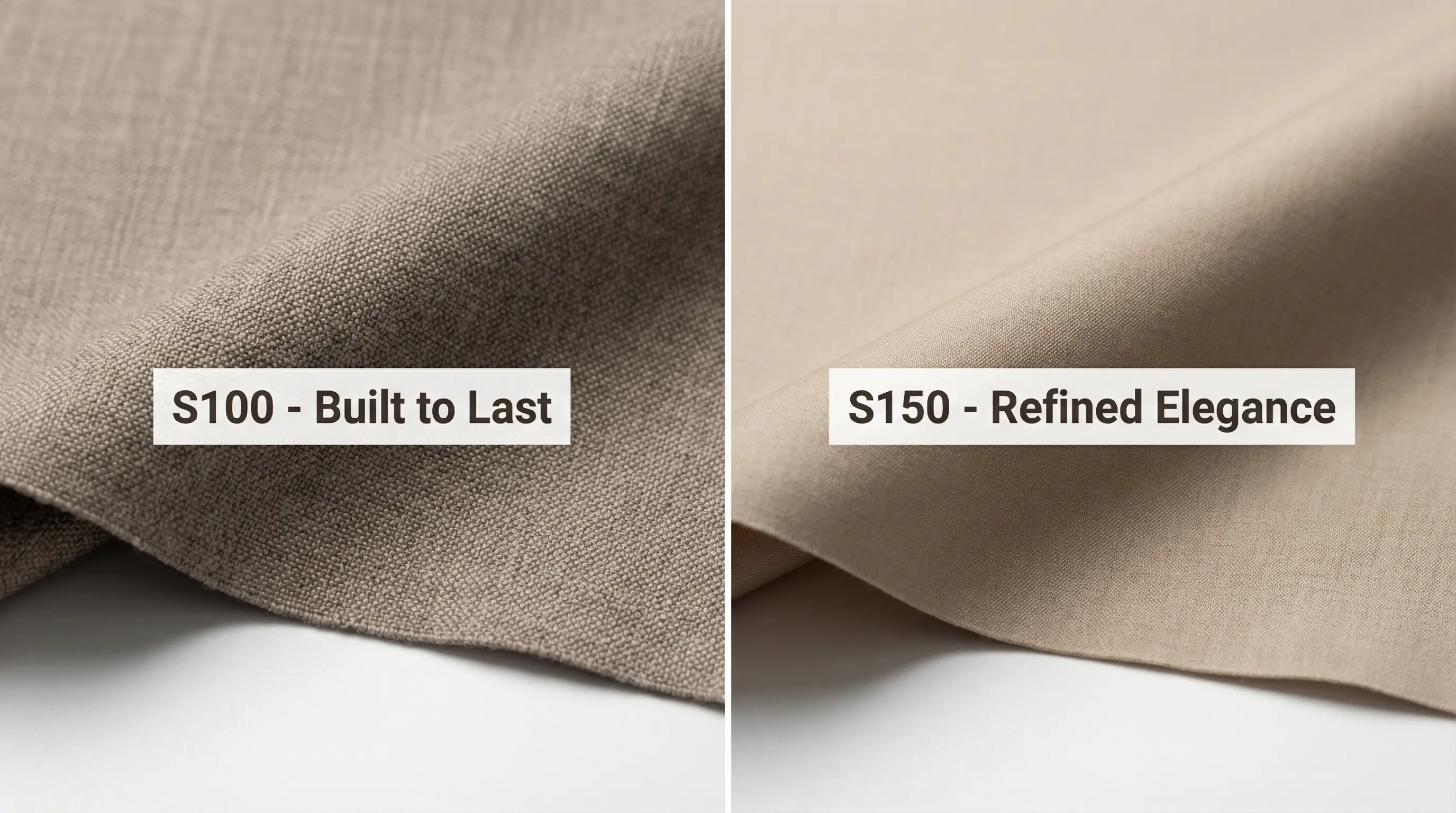
Super numbers (S100, S120, S150) measure how fine the wool yarn is:
- Super 120 = 120 meters of yarn weighs 1 gram
- Super 150 = 150 meters of yarn weighs 1 gram
Higher number = thinner fibers.
Sounds better, right?
Here's what most people miss: finer doesn't mean stronger. Often it's the opposite.
Why That London Buyer Called Us Back
Think about it. Would you rather build a bridge with thick steel cables or thin fishing line?
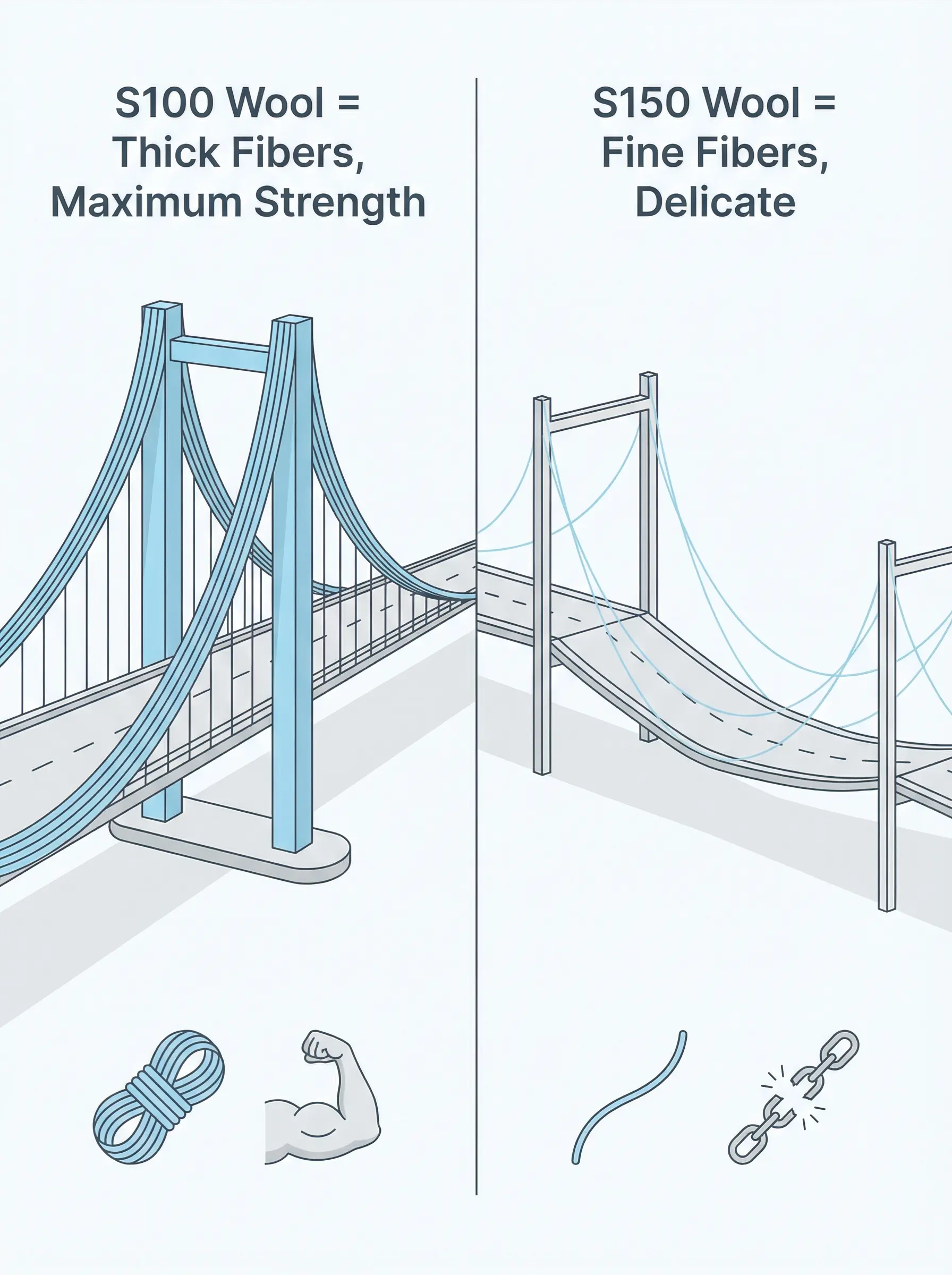
The fishing line might look more elegant. It might even be better material. But for a bridge that needs to hold weight? You want the thick cables.
Wool works the same way.
Shawn told me about a client a few years back who insisted on Super 150 for company uniforms. Beautiful fabric. Smooth as silk. Three months later they called asking why the elbows were wearing through.
"I told them: You asked for the finest thread. I gave you the finest thread. But you needed durability, not delicacy."
That London buyer? Their "Super 120 or higher" suits were for a sales team. People wearing them five days a week. Getting in and out of cars. Carrying sample bags.
After talking to Shawn, I called them back.
"Can I ask you something? Are these suits for boardroom meetings, or are your team actually working in them?"
Long pause.
"Working in them. Why?"
"Because Super 120 might not survive your team."
When High Super Numbers Actually Make Sense
Don't get me wrong — high Super numbers aren't bad. They're just specific.
Shawn recommends them for:
Special occasion wear
Evening suits worn a few times a year. Galas where you're mostly sitting. Prestige pieces where the drape and softness matter more than anything else.
The finer the yarn, the softer it feels. It drapes beautifully. It looks expensive because it is.
But expensive and practical? Not always the same thing.
When They Don't (Or: The Question Eric Always Asks)
Eric has a simple question he asks every client who requests high Super numbers:
"How often will this be worn, and what will the person be doing in it?"
If the answer is daily wear, active work, high-friction areas (elbows, knees, seat), or long-term wardrobe pieces, Eric usually recommends Super 100 or Super 110 instead.
Why? Those slightly thicker fibers create fabric that:
- Resists abrasion better
- Holds its shape longer
- Survives dry cleaning without thinning
- Costs less (so you can invest in better construction)
Eric told me last month: "Clients always ask for the highest Super number they can afford. The smart ones ask: 'What number will last for how we'll use it?' Those are the clients who come back happy."
The Real Question Isn't "How Fine?" It's "How Will It Be Used?"
After that conversation, we recommended Super 110 to the London buyer instead of their requested Super 120+.
Their response: "But isn't that... lower quality?"
No. It's the right quality for the purpose.
The best fabric isn't the one with the highest number. It's the one that matches your actual use.
Super 150 for a tuxedo worn twice a year? Perfect.
Super 150 for a sales rep's daily suit? Disaster waiting to happen.
Super 100 for that same sales rep? Still looks sharp at the end of year two.
How to Choose (Eric's Cheat Sheet)
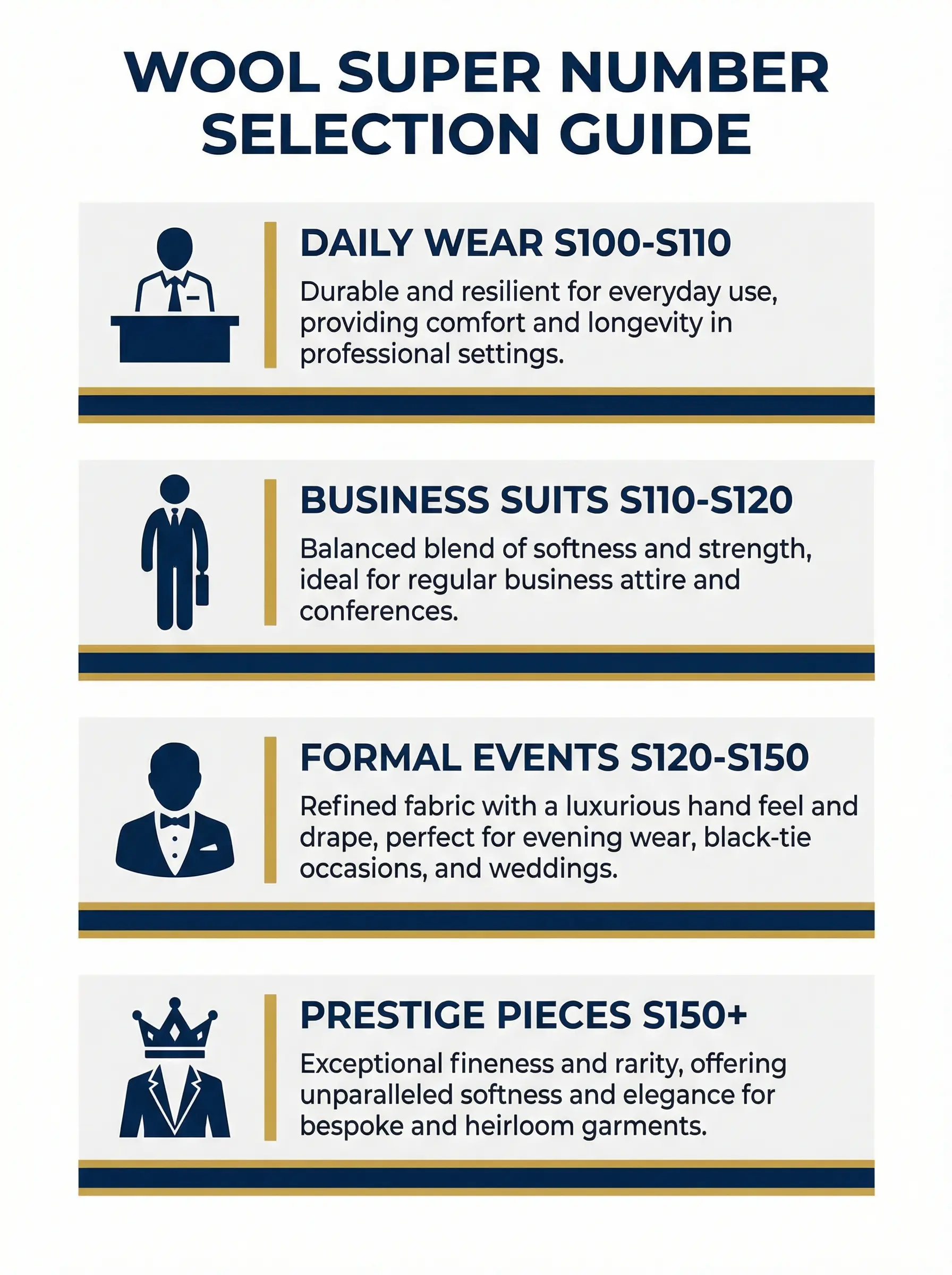
I asked Eric to break it down. Here's his guide:
| Use Case | Super Number | Why |
|---|---|---|
| Corporate uniforms, daily wear | S100-S110 | Maximum durability |
| Business suits, frequent use | S110-S120 | Good balance |
| Formal events, occasion wear | S120-S150 | Beautiful drape |
| Prestige pieces | S150+ | Ultimate softness (handle with care) |
Shawn says: "Super numbers tell you about fineness. Only experience tells you about fit-for-purpose."
What That London Buyer Did
Remember that buyer?
After I explained all this, they made a decision I really respected. They ordered Super 110 for the main line (the daily workhorses), but kept Super 130 for their executive collection (low-wear, high-impact pieces).
When the samples arrived, they sent me a message:
"I showed these to our team lead. He said the S110 feels like it could survive a year of trade shows. That's exactly what we needed. Thanks for talking us out of our own spec sheet."
That's the outcome I love. Not because we sold them something different, but because we sold them the right thing.
The Uncomfortable Truth
Shawn told me something that stuck:
"The textile industry loves selling people on numbers. Super 150! 1000 thread count! It sounds premium. And it is — for the right job. But a Super 100 suit that lasts five years is more premium than a Super 180 suit that pills after six months."
I think about that a lot.
We could sell you Super 180 fabric if you wanted. We have access to mills that produce it. It would be a higher invoice.
But you don't win if the fabric fails in six months.
That's not how Shawn built this company.
So What Do You Actually Need?
I can't answer that without knowing:
- What's the garment for? (Boardroom or field work?)
- How often will it be worn? (Weekly or annually?)
- What matters more? (Longevity or luxury feel?)
But I can tell you this:
If you're selecting fabric based only on Super numbers, you're making the wrong decision.
The right decision starts with a conversation about how the garment will actually be used.
That's the conversation we have with every client. Not "What's your budget?" but "What are you trying to achieve?"
Want to Talk Through Your Fabric Choice?
If you're working on a collection and you're not sure which Super number makes sense, we'd be happy to help.
Email info@fominte.com with:
- What you're making
- How it'll be used
- What you've been speccing so far
Eric's team will get back to you within 24 hours. We'll send fabric swatches if it helps — sometimes you need to feel the difference between S100 and S150 to understand.
We're not here to sell you the most expensive option. We're here to sell you the right one.
The best fabric is the one your customers are still wearing two years from now.
Stephen
Fominte