.png?w=970&h=250)
Outdoor Jacket MOQ, Sampling, and Lead Time: What Buyers Should Expect
What It Really Means
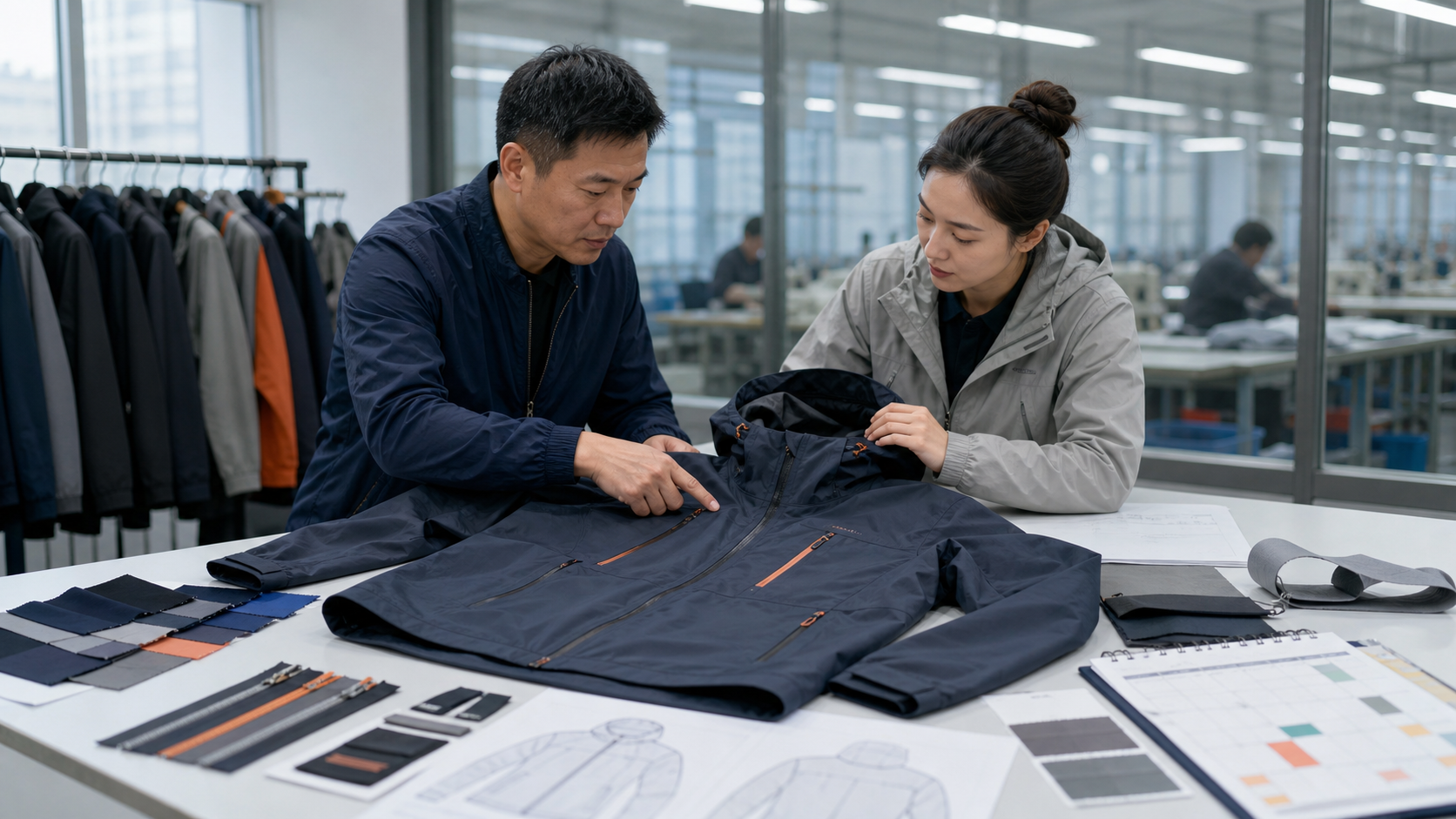
The Three Numbers Buyers Ask for First
MOQ, sample time, and lead time usually appear in the first message a jacket buyer sends. That makes sense. Before you invest in development, you need to know whether the factory can support your volume and your launch date.
The problem is that these three questions are often answered too quickly.
A supplier may say “100 pieces, sample in ten days, bulk in thirty days.” That sounds precise, but it leaves out the decisions that make the numbers meaningful. Is the MOQ per style, per color, or per fabric lot? Does the sample clock start before or after fabric confirmation? Does bulk lead time start when the deposit arrives, when the pre-production sample is approved, or when all custom trims are in-house? Is freight included?
For an outdoor jacket, those details are not administrative fine print. They are part of the product. A lightweight windbreaker using available fabric is not the same production problem as a fully seam-taped shell with a custom laminate, waterproof zipper, molded puller, printed lining, and market-specific testing.
At FOMINTE, we treat MOQ and timing as outputs of a reviewed specification. Our apparel manufacturing base and integrated outdoor-jacket supply chain let us evaluate the whole program, but the answer still has to come after the product system is clear.
Outdoor Jacket MOQ Is More Than a Sewing-Line Minimum
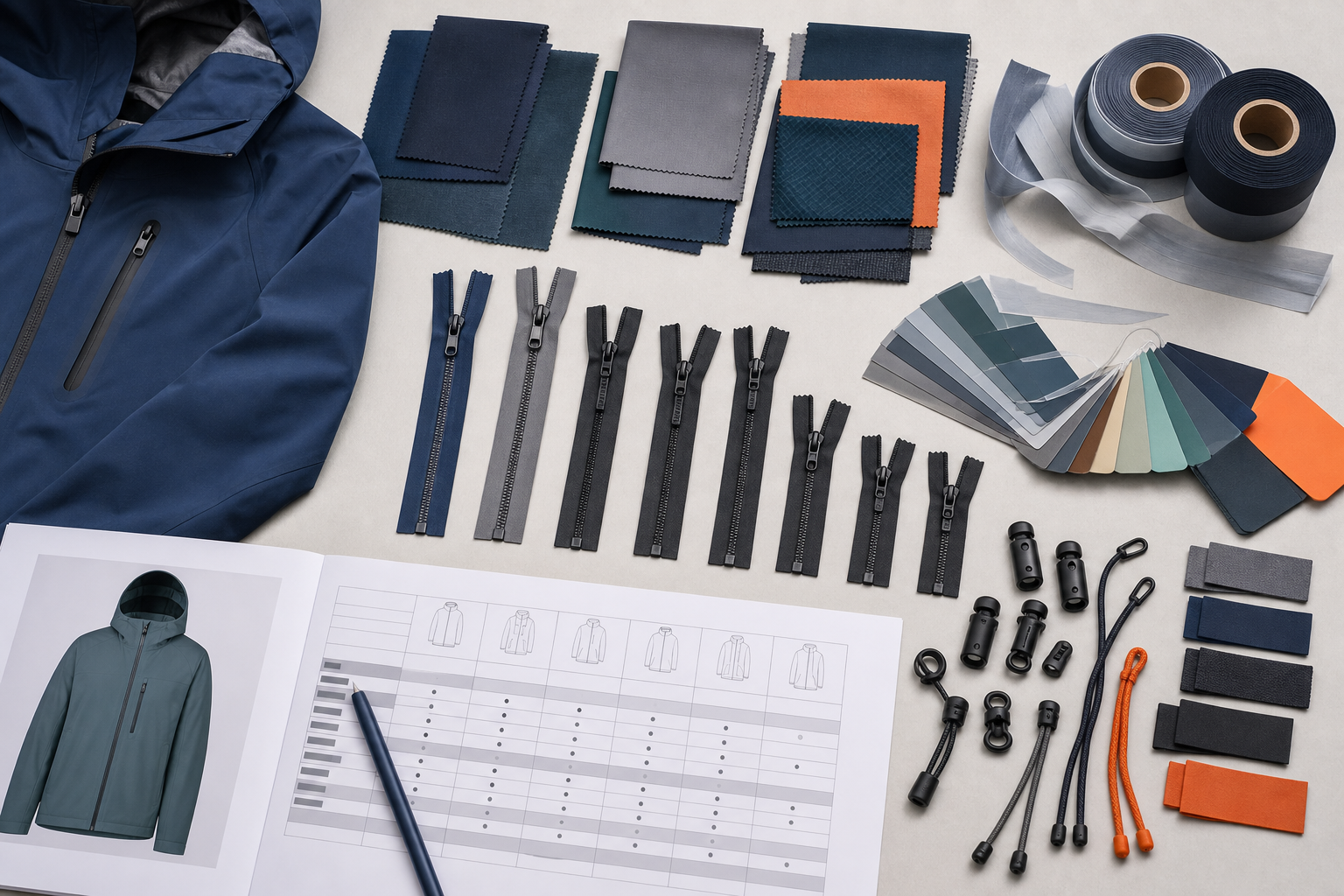
Buyers often imagine MOQ as the smallest number of jackets a sewing line is willing to assemble. That is only one layer.
The practical minimum may be set by the shell fabric mill, a custom color lot, the membrane or coating process, lining, zipper length and color, seam tape, logo application, labels, packaging, or the efficiency of cutting and line setup. The highest relevant minimum often becomes the constraint for the order.
Consider a program with one jacket style, four colors, and five sizes. A statement such as “400 pieces total” does not tell the factory whether that means 100 pieces in each color or an uneven split such as 220 black, 80 navy, 60 green, and 40 orange. The total may look workable while one color remains below the material supplier’s practical dyeing or trim minimum.
This is why a useful MOQ answer should name its unit:
- Per style
- Per color
- Per fabric or color lot
- Per custom trim
- Per order, with an agreed size ratio
Sizes can usually share a color quantity more easily than colors can share a dye lot. Even then, extreme size ratios can affect marker efficiency and material consumption. A buyer ordering mostly 3XL and 4XL units is not presenting the same cutting plan as a balanced S–XL run.
FOMINTE does not want buyers to discover these constraints after paying for a sample. We review the estimated quantity by style, color, and size early, together with the intended fabric and trim direction.
Why Fabric and Color Often Set the Real Minimum
The shell system is usually the first place to look. Available market fabric can support a different minimum and calendar from a custom-dyed or custom-laminated material. If the project requires a specific face fabric, membrane, backing, DWR direction, handfeel, or performance target, the material development may control both MOQ and lead time.
Color adds another layer. A standard black or navy may be available in a suitable construction. A brand-specific color may require a lab dip, buyer approval, bulk dyeing, and shade control. If the jacket uses contrast panels, each color can create a separate material commitment.
The same logic applies to lining. A standard mesh or taffeta can be simpler than a custom print or a specific recycled-content construction. A fleece-lined jacket also needs the shell and lining to be evaluated together for bulk, warmth, movement, shrinkage behavior, and assembly.
Our earlier guide to FOMINTE's outdoor jacket product range explains how softshells, rain shells, windbreakers, and fleece-lined jackets create different material systems. MOQ cannot be separated from that product choice.
Trims Can Quietly Rewrite the Order Plan
Outdoor jackets contain more trim decisions than many buyers expect: front zippers, pocket zippers, snaps, cord locks, elastic, hook-and-loop, seam tape, labels, hangtags, drawcords, eyelets, and packaging components.
A stock zipper in a standard color is one situation. A waterproof-style zipper in a precise color and length, with a branded puller, is another. The custom puller may require a mold; the zipper supplier may have a color or quantity minimum; and the zipper must still work with the garment construction.
Late trim decisions are a common source of false lead-time confidence. The jacket sample can look nearly approved while one component is still provisional. If that component changes the seam, pocket opening, logo position, or tape compatibility, it is not a cosmetic substitution.
The safer approach is to identify which sample components are final and which are temporary. Before bulk cutting, the factory and buyer should close that gap.
Sampling Is a Decision Cycle, Not Just Sewing Time
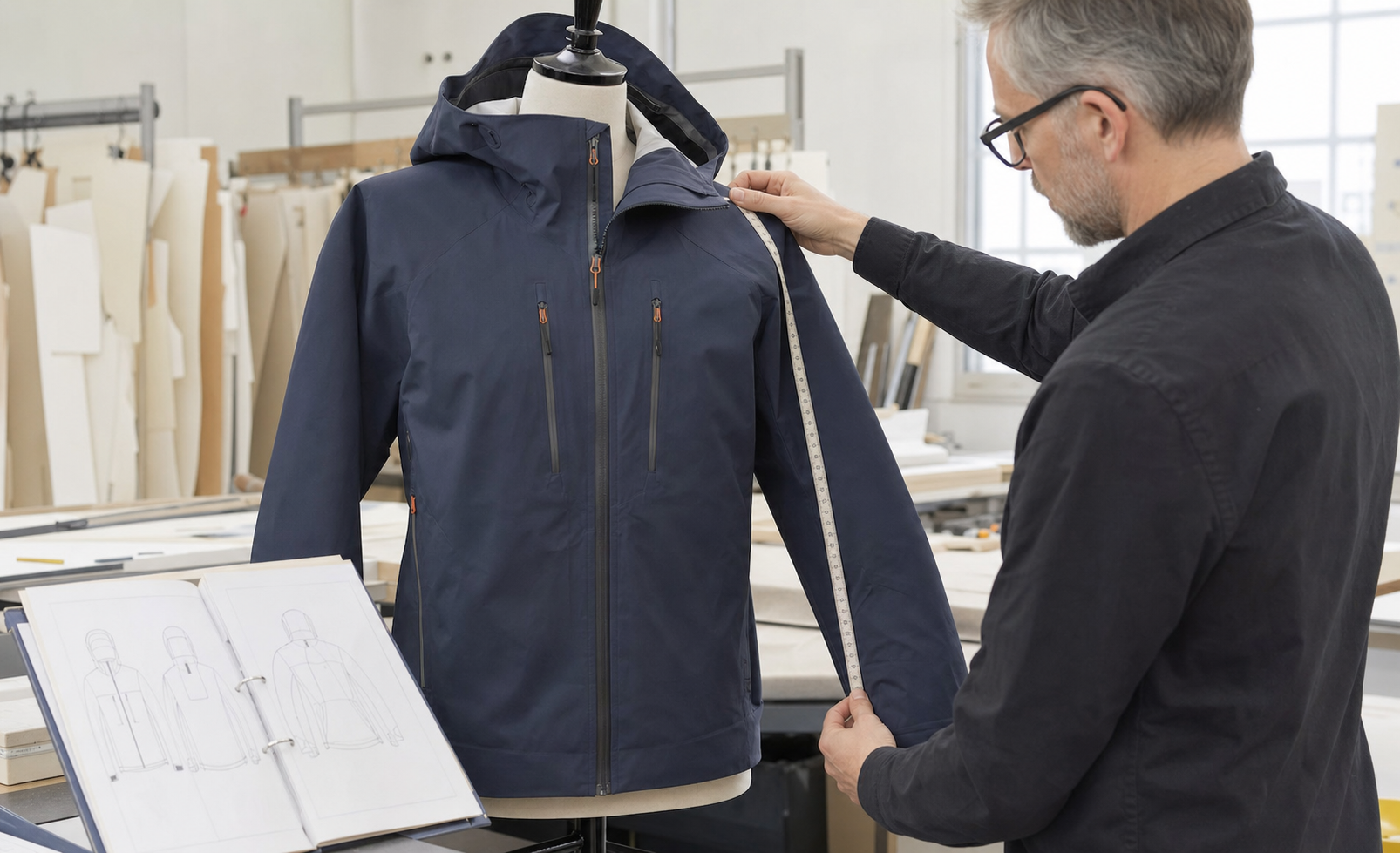
Public supplier pages commonly advertise jacket samples in roughly one to three weeks. That range can be useful for rough planning, but it should not be mistaken for a promise that applies to every specification.
A sample calendar can include technical review, fabric and trim sourcing, pattern development, sample sewing, internal inspection, courier transit, buyer fitting, consolidated comments, revision, and pre-production approval. Only part of that time is spent at a sewing machine.
The first clock should start when the development input is usable. A tech pack with drawings but no measurements, an unclear hood requirement, or an unresolved shell construction does not give the pattern and sample teams a stable target. The team can ask questions, propose options, and source references, but that clarification time still belongs in the calendar.
For a straightforward style using available materials, the development path may be short. For a technical waterproof jacket, sourcing the intended shell, confirming seam tape compatibility, reviewing zipper protection, and checking the hood and pocket construction can add necessary work. Multiple sample rounds are not automatically a failure; they become wasteful when each round contains scattered or contradictory changes.
Buyers can protect the schedule by returning one consolidated comment sheet. Mark each point as approved, revise, or pending. Include photos, measurements, and the intended correction. If fit comments come from one team, color comments from another, and trim changes arrive three days later, the sample room is forced to work against a moving target.
A Pre-Production Sample Is a Control Point
The first prototype answers, “Can this design become a jacket?” The pre-production sample answers a different question: “Is this the version we are authorizing the factory to reproduce?”
Before bulk, the approved reference should align with the final fabric, lining, color direction, trims, logo, labels, measurements, construction, and packing requirements as closely as the program requires. For performance outerwear, the seam plan and agreed product claims also need to be clear.
Approving a silhouette while leaving the zipper, seam tape, or lining unresolved is not full production approval. Starting bulk under those conditions may create a fast-looking calendar with slow, expensive corrections later.
Our outdoor jacket production-flow guide shows how pre-production approval connects to cutting, sewing, seam control, final inspection, and packing. Each downstream stage assumes the reference has stopped moving.
When the Bulk Lead-Time Clock Should Start
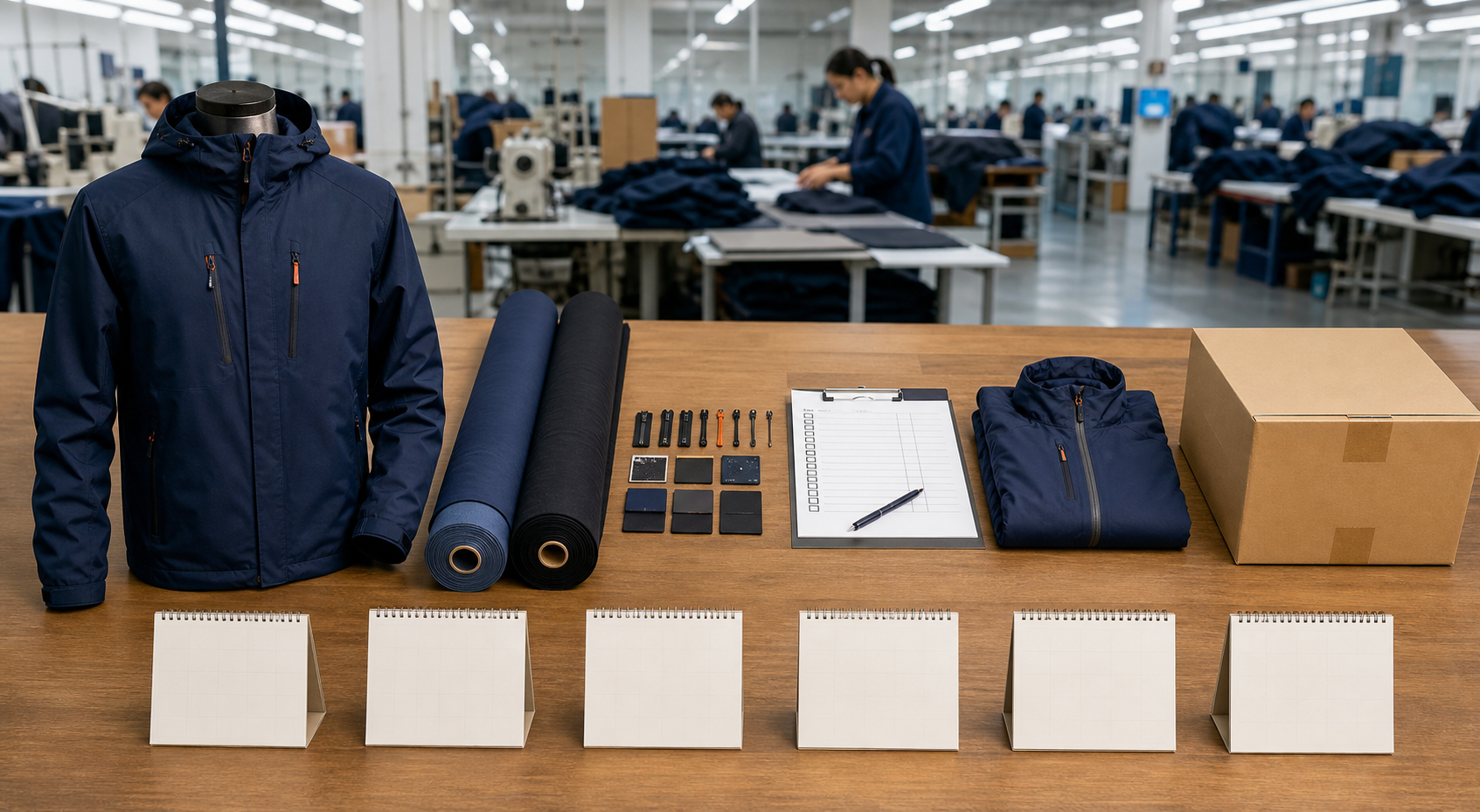
“Thirty days for bulk” is incomplete unless both sides agree on day zero.
A production-ready start normally requires an approved sample or documented specification, confirmed quantity and size ratio, final materials and trims, purchase order, agreed commercial terms, deposit where applicable, approved labels and packing, and an available production slot. If one critical input arrives later, the calendar may need to move.
Material booking can happen before every detail is finished when the risk is understood. That can save time, but it can also create exposure if the buyer later changes color, construction, or quantity. The decision should be explicit rather than hidden inside an optimistic quote.
Bulk time itself includes more than sewing. It may cover material arrival and inspection, cutting preparation, cutting, component control, sewing, seam taping where required, finishing, measurement checks, appearance inspection, packing, and shipment readiness. A multi-color order may also require color-lot management and staged material arrivals.
Peak-season capacity matters. Outdoor programs aimed at autumn and winter often compete for similar material and factory windows. A technically feasible order can still miss its commercial date if the production slot is discussed only after sample approval.
Production Completion Is Not Delivery
The factory completion date is the date goods are ready under the agreed inspection and packing terms. It is not automatically the date inventory reaches your warehouse.
The full delivery plan may include final inspection, corrective work if needed, buyer or third-party release, export documentation, pickup, consolidation, customs, international transit, destination clearance, and local delivery. Air, sea, rail, and courier routes have different costs and timing, and both origin and destination holidays can affect the plan.
This distinction matters when a brand builds a launch calendar backward from a retail date. The warehouse arrival target should include a buffer for inspection and logistics, not simply match the factory’s estimated completion day.
Planning MOQ Across Several Styles
Larger buyers rarely source one isolated jacket. A seasonal program may include a lightweight shell, a lined version, a vest, and a softshell, each in several colors. The obvious question is whether all units can be combined to reach one MOQ.
Sometimes shared components create real efficiency. Two styles may use the same shell fabric and color, the same lining, main zipper family, labels, drawcord, and packaging. Coordinated booking can improve material utilization and simplify approval. It can also reduce the number of independent variables the production team must manage.
But a commercial purchase order does not automatically become one production lot. A vest and a fully seam-taped jacket have different patterns, operations, labor content, line setup, and inspection needs. Two black fabrics with different face constructions or membranes cannot be treated as one dye lot simply because the color name matches. A zipper shared in appearance may still require different lengths for every style and size.
The useful planning exercise is a component map. List each style down one side and shell, lining, membrane or coating, seam tape, main zipper, pocket zipper, labels, logo method, packaging, and test requirements across the top. Mark what is truly shared, what is similar but not interchangeable, and what is unique.
This gives the buyer and factory a better basis for discussing minimums. It may reveal that three styles can share a fabric booking while each still needs its own garment quantity. It may show that reducing one rarely used color is more effective than reducing the total program. It can also identify a custom trim that creates a minimum far above the garment plan.
For repeat orders, the map becomes even more valuable. Approved patterns, known material sources, retained trim specifications, and a stable quality standard can shorten the decision cycle. That does not mean every reorder has the same calendar: raw-material availability and production capacity still change. It means fewer questions need to be reopened.
How to Shorten the Calendar Without Removing Controls
Speed comes mostly from removing uncertainty and idle time.
Start with one owner for buyer feedback. A single consolidated approval is faster than several departments sending separate revisions. Freeze the product claim early: wind-resistant, water-resistant, or waterproof construction leads to different fabric, seam, zipper, and testing decisions.
Choose available materials when the product and brand brief allow it. Standard trims and shared components across a range can reduce sourcing work and minimum conflicts. If custom development is important, approve lab dips, artwork, zipper details, and labels in parallel where the dependencies allow it.
Respond to sample questions quickly, but do not approve blindly. A 24-hour response that clearly says “approved” or gives complete correction data saves time. A fast vague answer moves uncertainty downstream.
Finally, discuss the production window before the last sample round. The factory can then flag seasonal capacity, long-lead materials, and inspection requirements while there is still time to adjust.
What FOMINTE Needs for a Reliable Answer
For an initial factory review, send the jacket type and target market, tech pack or reference garment, estimated quantity by color, expected size range, shell and lining direction, weather-protection claim, zipper and trim expectations, logo method, compliance or testing needs, target warehouse date, and destination.
If some details are not decided, mark them as open. An honest open item is more useful than a guessed specification. Our team can identify which choices control MOQ, sampling, cost, and timing, then return a project-specific path.
That is the practical difference between a headline answer and a production answer. The headline may fit in one message. The production answer gives your team something it can actually plan against.
Step-by-Step Guide
Define the jacket program
Review MOQ constraints
Plan the sample cycle
Lock pre-production inputs
Start the bulk clock
Build the delivery plan
When to Use & Avoid
Available-material softshell
✅ Use When
- Standard colors
- moderate trim customization
- straightforward weather claim
⚠️ Avoid When
- When a proprietary laminate or highly customized trim package is essential
Custom-color rain shell
✅ Use When
- Brand-specific color
- planned seasonal program
- buyer can approve lab dips early
⚠️ Avoid When
- When the launch date cannot absorb color development and bulk dyeing
Technical waterproof shell
✅ Use When
- Defined waterproof target
- seam-control plan
- special zipper and testing needs
⚠️ Avoid When
- When the buyer wants an instant quote without a construction review
Multi-style outerwear program
✅ Use When
- Shared materials and trims
- planned size and color ratios
- repeat seasonal business
⚠️ Avoid When
- When every style uses unrelated fabrics, colors and components with very small splits
Comparison
| Question | Headline Answer | Production-Ready Answer |
| What is the MOQ | ?One total piece count | Minimum by style, color, material lot, custom trim and agreed size ratio |
| How long is sampling | ?A fixed number of sewing days | Review, sourcing, pattern, sewing, internal QC, courier, buyer comments, revision and PP approval |
| When does bulk lead time start | ?When the buyer says go | From a named event after approval, quantity, materials, commercial terms and production slot are confirmed |
| When will I receive the goods | ?The factory completion date | Factory completion plus inspection, release, export, transit, customs and local delivery |
| Can the order be rushed | ?A surcharge and a shorter promise | A dependency review showing what can run in parallel and which controls cannot be removed |
⚡ Common Mistakes to Avoid
Everything You Need to Know
Conclusion