.png?w=970&h=250)
How We Control Quality: Fominte's Inspection System from Raw Material to Packing
What It Really Means
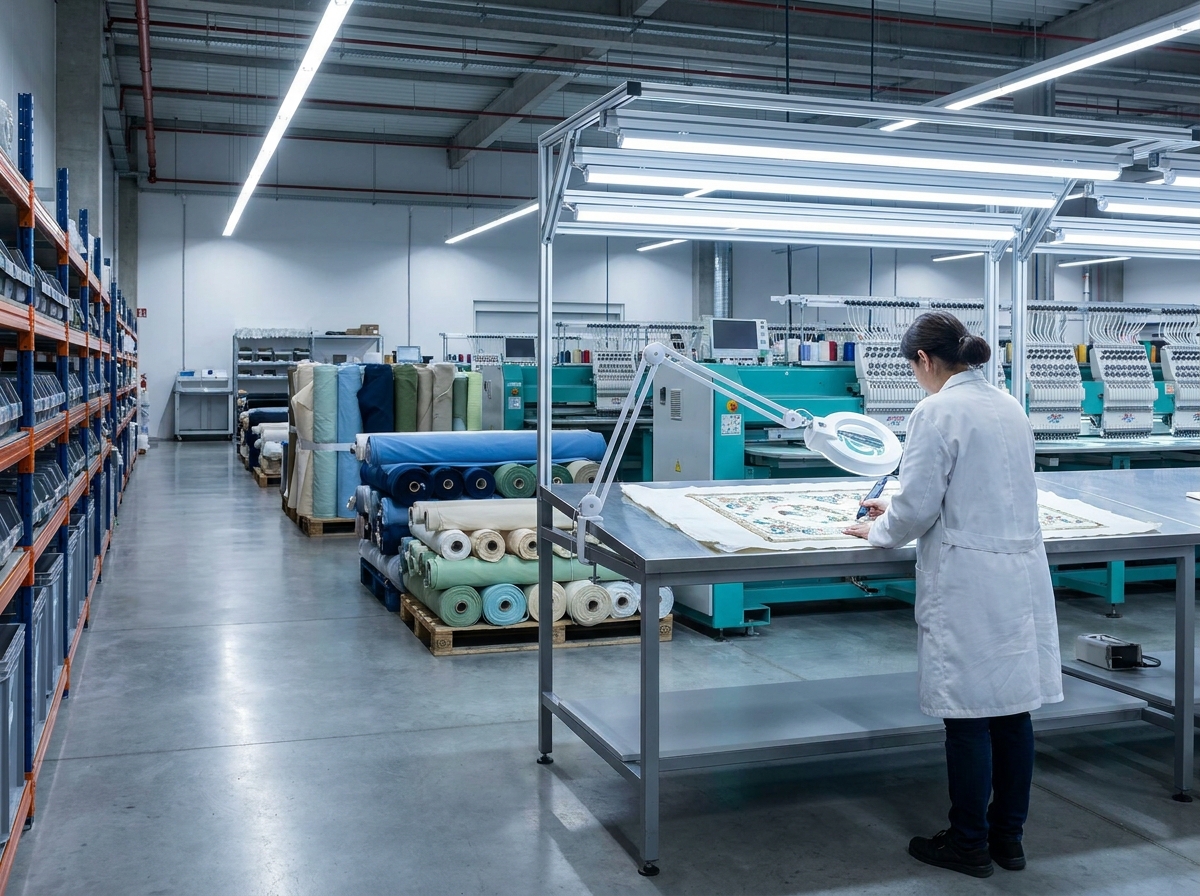
How We Inspect Raw Materials Before Production Starts
Most quality problems in embroidered fabric don't start at the embroidery machine. They start in the raw material. A fabric roll with uneven tension, a batch of thread with inconsistent dye lots, a stabilizer that doesn't match the base cloth. Any of these can ruin thousands of meters before a single stitch is made.
At Fominte, our quality control process begins the moment materials arrive at our warehouse. Not after cutting. Not after embroidery. Before anything touches a machine.
Fabric Inspection
Every roll of fabric goes through a standard intake check. We measure width consistency (tolerance: ±1cm), weigh the roll to verify gram weight (tolerance: ±5%), and scan for weaving defects under D65 standard lighting. Our acceptance threshold: no more than 2 defects per 50 yards. If a roll exceeds that, it gets quarantined and reported before it enters production.
We use a 4-point inspection system, the same standard used by major international retailers. Defects are scored by size: 1 point for anything up to 3 inches, 2 points for 3 to 6 inches, 3 points for 6 to 9 inches, and 4 points for anything over 9 inches. Rolls that exceed the point threshold don't make it to the cutting table.
Thread and Bobbin Quality
Embroidery thread isn't just color. It's tension behavior, abrasion resistance, and colorfastness. Before production, we verify thread batches against the approved sample: same brand, same dye lot when possible, same weight rating. Bobbin thread gets checked separately because bobbin tension problems are invisible from the front but destroy the back of the fabric.
For large orders, we lock thread supply early. Running out mid-production and switching dye lots is one of the most common causes of color inconsistency that buyers don't discover until the goods arrive.
Stabilizer and Backing Verification
The backing material underneath embroidered fabric is what holds everything together. For water-soluble embroidery, this is especially critical because the stabilizer dissolves during finishing. Wrong weight or wrong type means puckering, distortion, or the embroidery pulling away from the base over time. We match stabilizer to the specific fabric and design density across the types of embroidery we produce. Heavier designs need heavier backing, stretchy fabrics need cut-away stabilizers rather than tear-away.
This step gets overlooked at many factories. We treat it as a production requirement, not an afterthought.
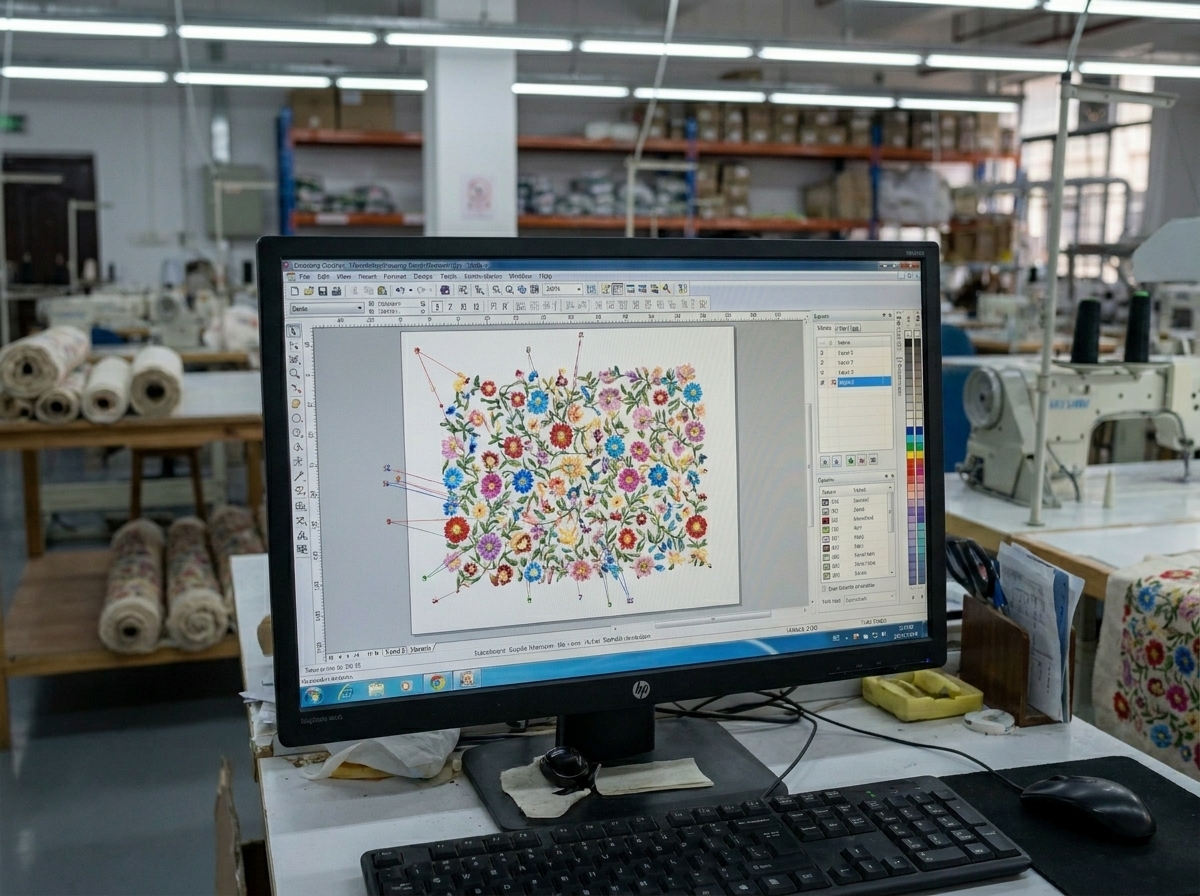
In-Process Monitoring: What We Check During Embroidery
The idea that quality control means "checking the finished product" is one of the most expensive misconceptions in textile manufacturing. By the time you've embroidered 30,000 meters with a tension problem, you've wasted thread, machine time, and potentially the fabric itself. We monitor during production, not just after.
Digitizing File Review
Before any design goes to the machine, the digitizing file gets reviewed by our technical team. The file is the blueprint — if the stitch path is wrong, the density is off, or the underlay structure doesn't match the fabric behavior, no amount of skilled machine operation can fix it.
About 15% of digitizing files we receive from clients need modification before production. Common issues: stitch density too high for the base fabric, missing underlay for stretchy materials, color sequence that causes unnecessary jump stitches. We catch these before they reach the machine floor, not after the first 5,000 meters come out wrong.
First Piece Confirmation
Once the machine is set up and the file is loaded, we run 3 to 5 test pieces. These get checked against the approved sample for stitch accuracy, color match, placement, and overall appearance. The client approves the first piece before we start bulk production. No exceptions.
This step alone prevents the most common complaint we hear from buyers who've worked with other factories: "The sample was perfect, but the bulk order looks different."
Thread Tension and Break Monitoring
Our 27 embroidery machines run 62 heads each, and each head needs consistent thread tension throughout the production run. Our operators check tension regularly using a 2-inch satin stitch test — if the stitch doesn't lay flat and even, the tension needs adjustment.
Thread break rate on our floor runs between 1 and 3 breaks per 10,000 stitches. When a break happens, the machine stops, the operator rethreads, and inspects the area around the break for any visible defect. High break rates signal a problem with the thread batch, the needle condition, or the digitizing file — all of which get investigated immediately rather than tolerated.
Registration and Alignment Checks
For designs with multiple colors or placement requirements (like all-over patterns or matched panels), registration accuracy matters. We check alignment at regular intervals during the run, not just at the start. Fabric can shift under the hoop over time, especially on longer runs, and even a 1mm drift is visible on geometric or symmetrical designs.
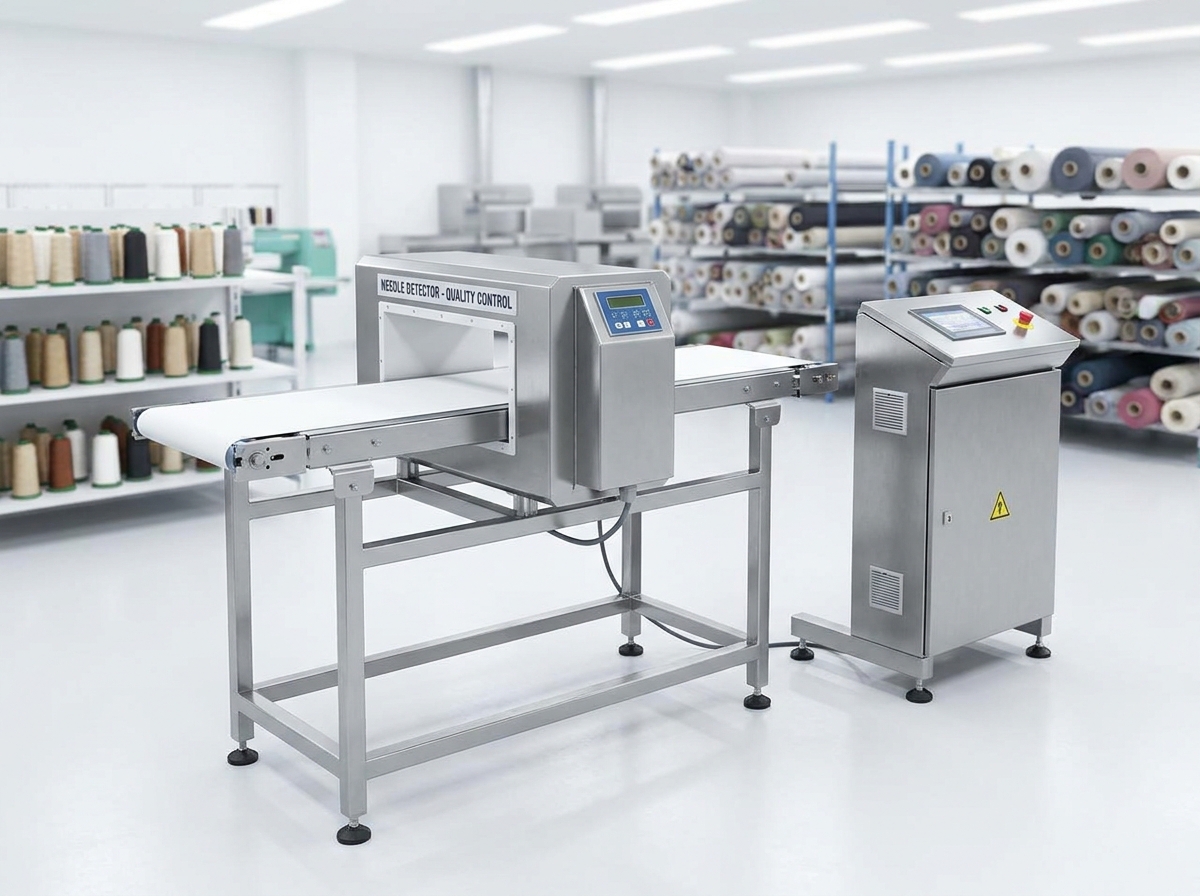
Final Inspection: The Standards We Ship Against
When production is complete, the order doesn't go straight to packing. It goes through our final inspection process, the last gate before goods leave our facility.
100% Needle Detector Check
Every piece of embroidered fabric passes through our needle detection equipment. This isn't sampling — it's 100% inspection. Broken needle fragments in fabric are a safety hazard and a liability issue, especially for goods going to markets with strict consumer safety regulations. We don't take chances with this.
Dual Light Source Color Check
Color matching under one light source can look perfect and look completely wrong under another. We use both D65 (daylight equivalent) and TL84 (retail store lighting) to verify color consistency. If a batch looks different under either light source, it doesn't ship.
This matters more than most buyers realize. A fabric that looks right in your office under fluorescent lights might look green or yellow under the retail lighting where your customers actually see it. We test under both conditions so you don't get returns for color mismatch.
AQL Sampling and What It Means
We use AQL 2.5 as our standard for final inspection, the same benchmark used by major international retailers. AQL stands for Acceptable Quality Level, and it's a statistical sampling method that determines whether an entire batch meets quality requirements based on inspecting a random sample.
For an order of 10,000 meters, we inspect a statistically determined sample size. If the number of defective pieces in that sample stays within the AQL 2.5 threshold, the batch passes. If it exceeds the threshold, the entire batch gets re-inspected or reworked.
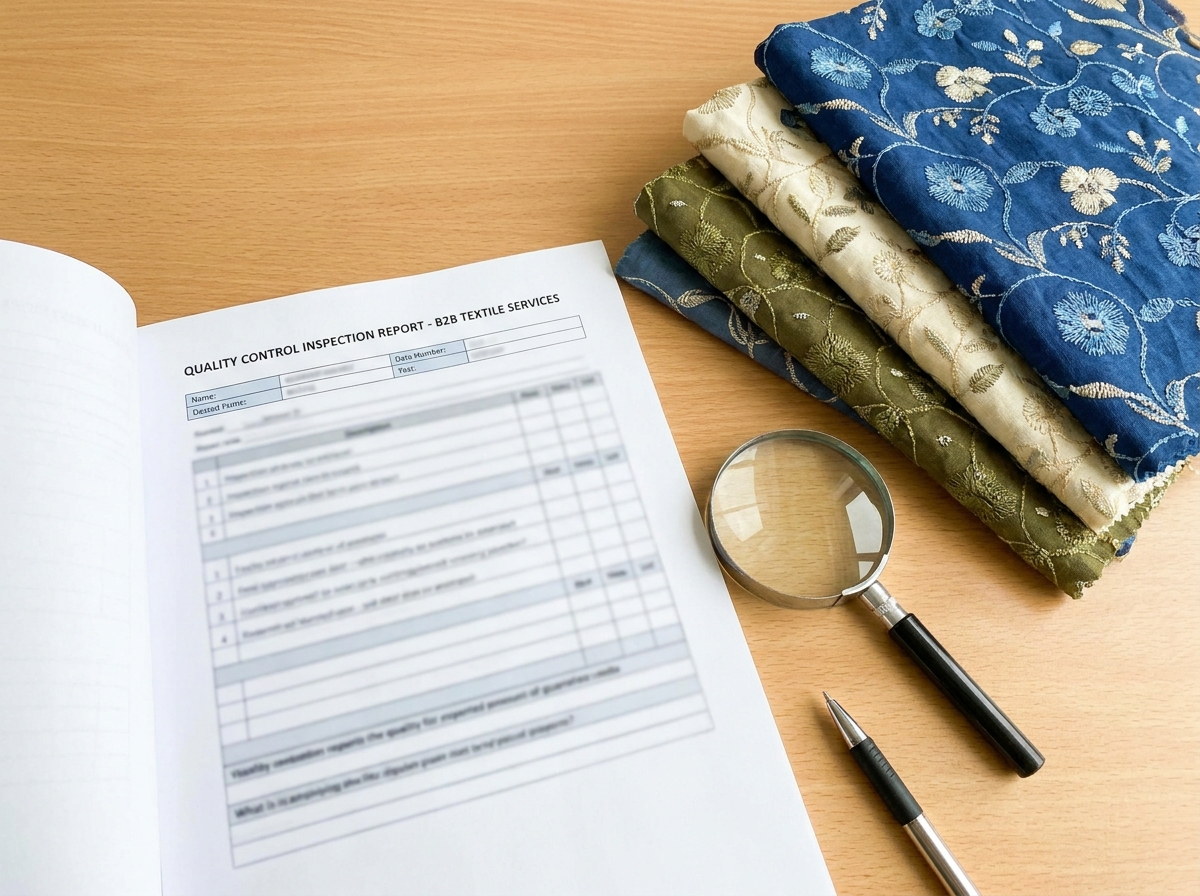
The key difference between our approach and what you'll find at many factories: we document everything. Every inspection produces a written report with measurements, defect counts, and pass/fail results. That report travels with your order.
Defect Classification
Not all defects are equal. We classify them into three categories:
- Critical defects: Safety hazards (needle fragments, sharp objects) — zero tolerance, automatic rejection
- Major defects: Visible quality issues that affect the product's function or appearance (holes, significant color deviation, pattern misalignment) — cause for rejection
- Minor defects: Small imperfections that don't affect function or appearance at normal viewing distance (tiny loose threads, minor tension variations) — tracked but within acceptable limits
This classification system means we're not rejecting goods for trivial issues, and we're not passing goods with real problems. The standard is consistent and documented.
The Numbers: Our Quality Track Record
Numbers matter more than promises. Here are the numbers we ship against:
| Metric | Our Standard | Industry Typical |
|---|---|---|
| Defect rate | <2% | 3-5% |
| Shrinkage | <3% | 3-5% |
| Colorfastness | Grade 4 | Grade 3 |
| Pull strength | Meets international standard | Varies |
| Monthly output | 300,000 meters | — |
These aren't aspirational targets. They're production data from a factory running 27 embroidery machines with 62 heads each, backed by a team of 100 to 200 production staff and a 10-person design team handling digitizing, pattern optimization, and technical support.
A defect rate below 2% on 300,000 meters of monthly output means we're catching problems before they become your problems. It also means when something does slip through, it's statistically rare — and we investigate why it happened rather than writing it off as "normal."
Our colorfastness rating of Grade 4 means the embroidered fabric holds its color through washing, light exposure, and rubbing at a level that meets the standards of brands selling into European and North American markets. Grade 3 is technically "acceptable" in many markets — we don't ship at "acceptable."
Certifications: What They Actually Test
Certifications aren't wall decorations. They're third-party audits of our production process, and they matter for different reasons depending on where your products are going and who your end customers are.
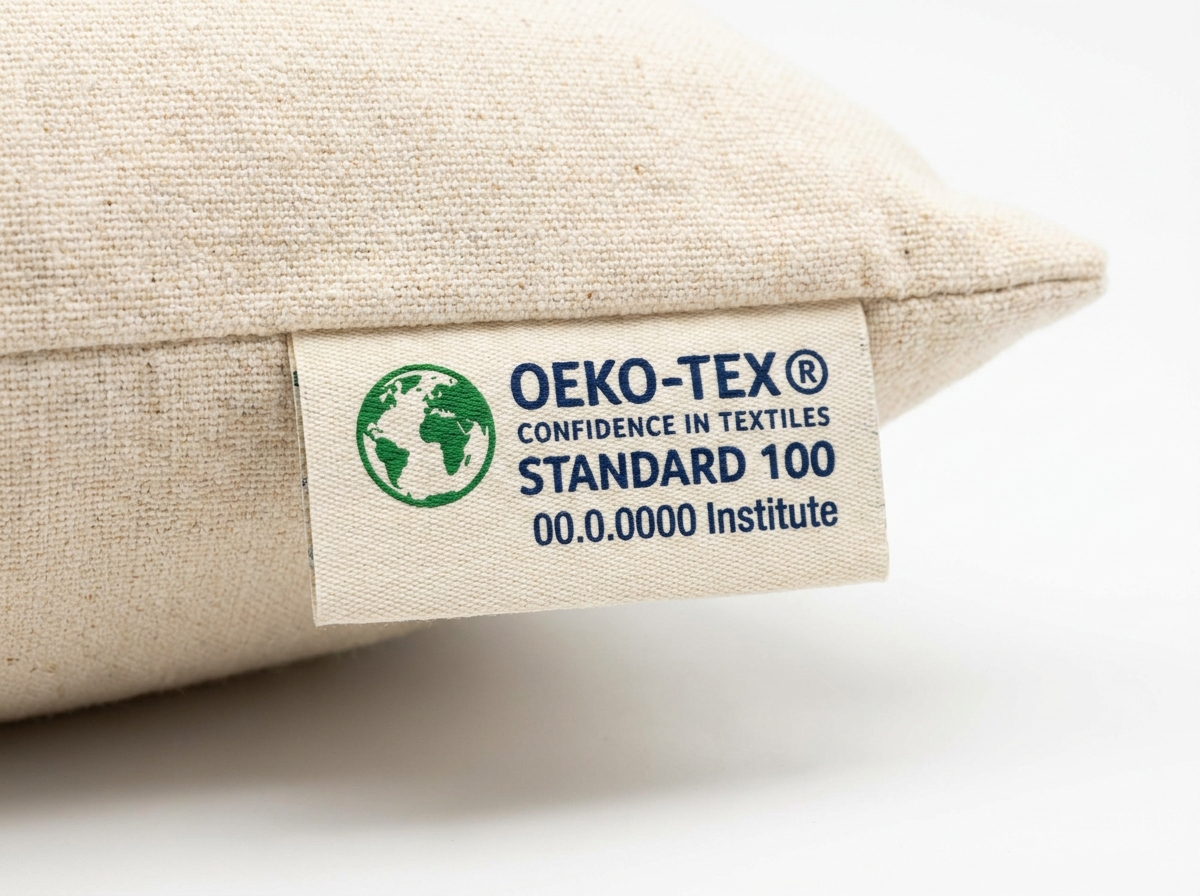
This certification tests for harmful substances in textile products. It covers formaldehyde, heavy metals, pesticide residues, and a long list of chemicals that are restricted in consumer textiles. It covers formaldehyde, heavy metals, pesticide residues, and a long list of chemicals that are restricted in consumer textiles. If you're selling into the EU or North America, OEKO-TEX is often a baseline requirement — not a nice-to-have.
What it means for your order: every batch of our embroidered fabric has been tested and certified free of harmful substances above the limits set by OEKO-TEX. The certification applies to the finished product, not just the raw materials.
The Higg Index is a sustainability assessment tool that measures a facility's environmental and social performance. It covers energy use, water management, waste handling, chemical management, and labor practices. Our Higg Index score reflects how our factory operates — not just what we produce.
For buyers with sustainability commitments or ESG reporting requirements, our Higg Index score provides verifiable data about the factory behind your order.
Amfori BSCI
Amfori BSCI (Business Social Compliance Initiative) audits social compliance: labor conditions, working hours, fair wages, worker safety, and freedom of association. This certification matters for buyers whose customers or regulators require supply chain transparency.
What sets our compliance apart: we maintain these certifications continuously, not just for audit season. The standards we meet during an announced audit are the same standards we meet every other day of the year.
FAQ
What is the acceptable defect rate for embroidered fabric?
The international benchmark is AQL 2.5, which is the standard we use. Our actual production defect rate is below 2%, which means the vast majority of our output exceeds the AQL threshold. For context, AQL 2.5 means that in a statistically sampled batch, no more than a defined number of defective pieces are acceptable. Our real-world performance stays well within that limit.
How do you ensure color consistency across large orders?
We lock thread supply for the entire order before production starts, using the same dye lot whenever possible. We check color under both D65 (daylight) and TL84 (retail) lighting using calibrated equipment. For orders that span multiple production runs, we maintain a reference sample from the first run and compare subsequent batches against it. If there's any deviation, we stop and investigate before continuing.
Can I get a quality inspection report before shipping?
Yes. Every order comes with a written inspection report that includes measurements, defect counts, color check results, and pass/fail status for each inspection point. We don't ask you to take our word for it — the data is in the report. If you want a third-party inspection on top of our internal QC, we welcome it and will cooperate fully with firms like SGS, Bureau Veritas, or Intertek.
What happens if the fabric fails inspection?
Any material that fails at any stage gets pulled from production. Depending on the type of defect, it either gets corrected (for fixable issues like loose threads or minor alignment problems), gets reworked (for serious defects that require re-embroidery), or gets scrapped (for defects that can't be repaired). Nothing that fails inspection reaches your shipment. The defect gets logged, and we analyze patterns to prevent the same issue from recurring.
Want to see our QC checklist for your specific order? Send us your specs at info@fominte.com and we'll walk you through exactly what we'll inspect, what standards we'll test against, and what your inspection report will look like. No commitment required.
When to Use & Avoid
Fabric intake inspection
✅ Use When
- All orders: width, weight, weave defects checked under D65 lighting with 4-point scoring system
Digitizing file review
✅ Use When
- All custom designs: about 15% of files need modification before reaching the machine floor
First piece confirmation
✅ Use When
- Every production run: 3-5 test pieces checked and client-approved before bulk starts
Thread tension monitoring
✅ Use When
- Continuous during production: 2-inch satin stitch test at regular intervals
100% needle detection
✅ Use When
- Every finished piece: safety check for broken needle fragments
Dual light source color check
✅ Use When
- Every batch: verified under both D65 daylight and TL84 retail lighting
Comparison
| Metric | Our Standard | Industry Typical |
| Defect rate | Less than 2% | 3-5% |
| Shrinkage | Less than 3% | 3-5% |
| Colorfastness | Grade 4 | Grade 3 |
| Monthly output | 300,000 meters | Varies |
⚡ Common Mistakes to Avoid
Everything You Need to Know