.png?w=970&h=250)
Hello everyone, Stephen here.
A question I hear all the time is: "What's the difference between cotton and poplin?"
This is a great question, and I am happy to answer it. But the answer is a little tricky, because it is like asking, "What's the difference between flour and a cake?"
Today, I want to share a very important secret about fabrics: the difference between a fiber and a weave. Once you understand this, you will be an expert.
Let's think about it like baking that cake:
-
The FIBER is your ingredient (like flour, eggs, and sugar).
-
The WEAVE is your recipe (how you mix and bake the ingredients).
You need both to make the final product. Let's break it down.
Part 1: What is a Fiber? (The Ingredient)
The fiber is the raw material, the basic thread that is used to make any fabric. Fibers can be natural (from a plant or animal) or man-made (from chemicals).
Some popular fibers are:
-
Cotton (from a plant)
-
Silk (from an insect)
-
Wool (from an animal)
-
Polyester (man-made)
For this guide, let's focus on Cotton. As a fiber, cotton is loved for its amazing qualities: it is soft, natural, strong, and it lets your skin breathe. It is one of the most popular ingredients in the world.
.webp?w=1024&h=973)
Part 2: What is a Weave? (The Recipe)
The weave is the way we construct the fabric. It is the pattern of how we crisscross the threads (the fibers) together. The weave completely changes how a fabric feels and behaves, even if the fiber is the same.
Some popular weaves are:
-
Twill (the diagonal weave used for denim jeans)
-
Satin (a weave that creates a very shiny, smooth surface)
-
And, of course, Poplin.
Poplin is a type of "plain weave," which means the threads go over and under in a simple pattern. But what makes poplin special is that the threads going lengthwise (warp) are finer than the threads going crosswise (weft). This creates a fabric that is very strong and durable, but also smooth, cool, and crisp to the touch.
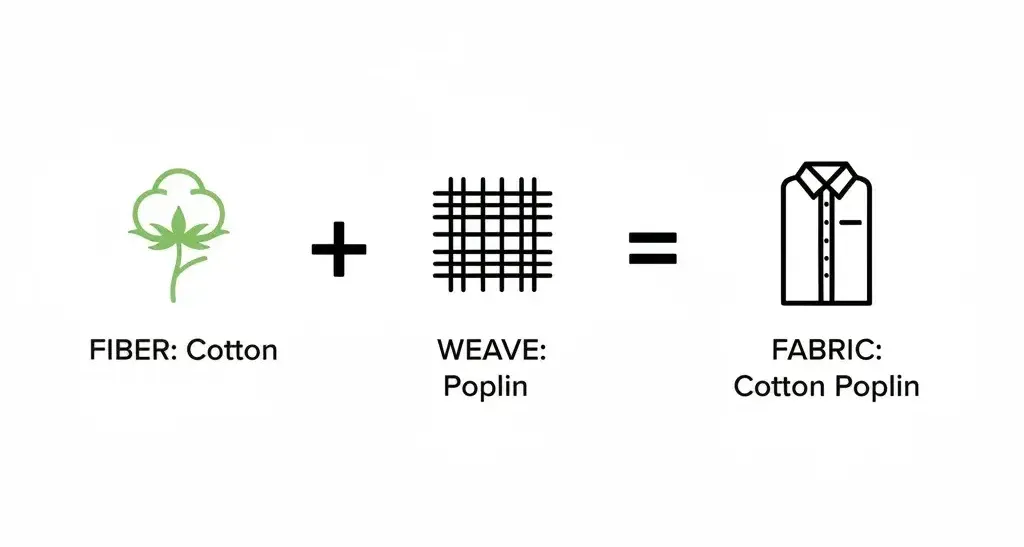
Bringing It Together: The Magic of Cotton Poplin
So, now we can answer the original question!
When you take the soft, breathable cotton fiber (our ingredient) and use the strong, crisp poplin weave (our recipe), you create one of the most popular and versatile fabrics in the world: Cotton Poplin.
Cotton Poplin has the best qualities of both:
-
It is soft and lets your skin breathe (thanks to the Cotton).
-
It is strong, durable, and has a crisp, smooth feeling (thanks to the Poplin weave).
-
It is less likely to wrinkle than other types of cotton weaves.
-
It is a perfect surface for printing sharp, clear designs.
Why Designers Love Cotton Poplin
Now you can see why designers choose cotton poplin for so many different kinds of clothes.
-
The Perfect White Shirt: The crispness of the poplin weave gives a shirt a sharp, professional look that holds its shape all day.
-
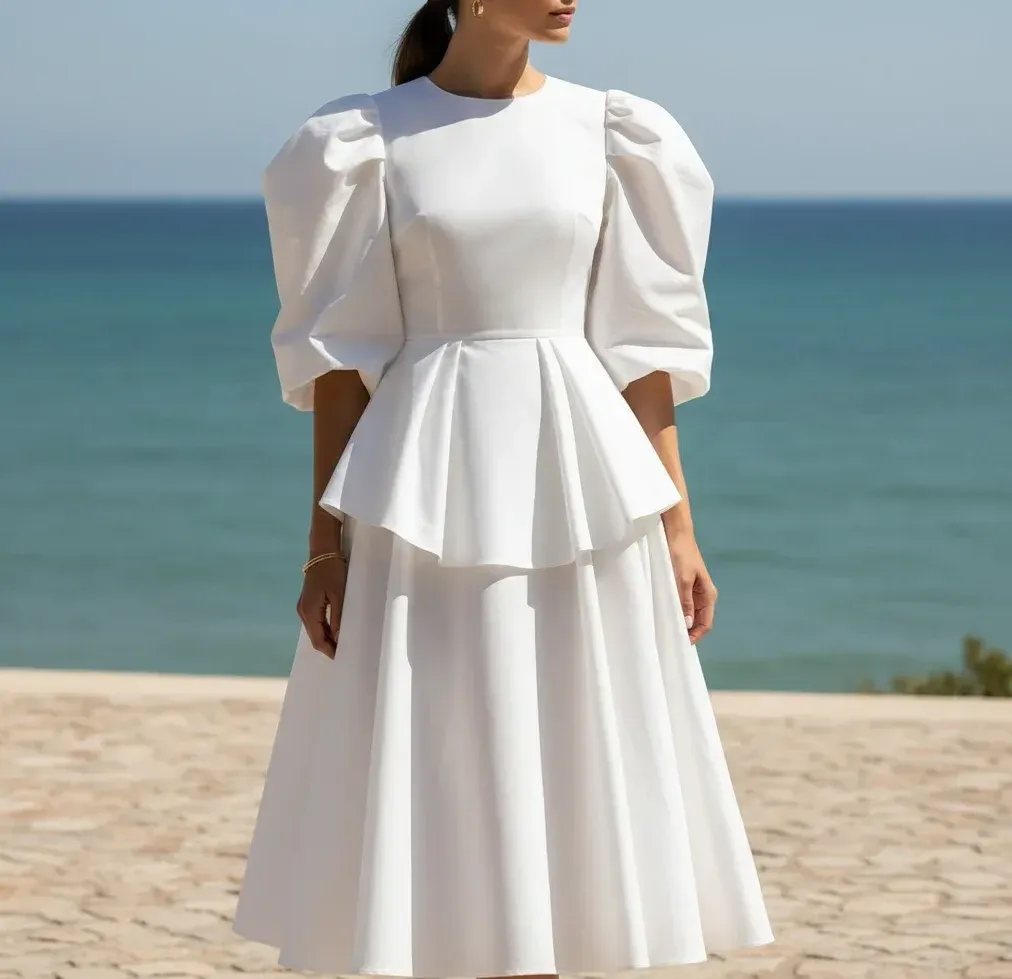
Crisp Summer Dresses: It is lightweight and breathable, making it perfect for stylish dresses that are comfortable to wear in warm weather.
-
High-Quality Linings: The smooth surface of cotton poplin makes it a comfortable and durable lining for jackets and trousers.
-
Children's Couture: Because it is both strong and soft, it is a wonderful choice for high-end children's clothing.
A Pro-Tip from Stephen
"When I am choosing a cotton poplin, I always feel for its 'body'. A high-quality poplin should feel crisp, but not stiff like paper. It should have a life to it, a subtle resilience when you crush it in your hand. This small difference in feel is what separates a good garment from a truly great one."
Understanding Fabric is The Key to Great Design
Whether you are looking for a classic Cotton Poplin, a modern polycotton blend, or a complex embellished fabric, understanding the difference between fiber and weave is essential.
Our team lives and breathes textiles. We love talking about all these details, because we know they are the key to creating beautiful clothing. We are here to help you find the perfect material for your vision.
I hope this guide has cleared up the confusion and made you feel more confident about fabrics.
Thank you for reading,
Stephen
