.png?w=970&h=250)
Introduction: The Era of "Active Insulation" is Here
If you look at the top-rated fleece jackets on consumer review sites like OutdoorGearLab this year, you’ll notice a significant shift. The "Best Overall" awards are no longer just going to the thickest, heaviest jackets. Instead, lightweight, highly breathable options like the Patagonia R1 Air are stealing the spotlight.
Why? Because end-consumers have changed how they use fleece. They aren't just sitting around a campfire; they are trail running, ski touring, and power hiking. They need "Active Insulation"—gear that dumps heat when they move and traps heat when they stop.
As a professional fleece apparel manufacturer, we have seen a 300% increase in inquiries for Grid Fleece fabrics. In this post, we’ll break down the manufacturing science behind this trend and how you can incorporate it into your next collection.
The Science Behind the Grid: How We Balance Warmth & Breathability
Standard solid fleece is great for static warmth, but it often acts like a plastic bag during high-output activities, trapping sweat inside.
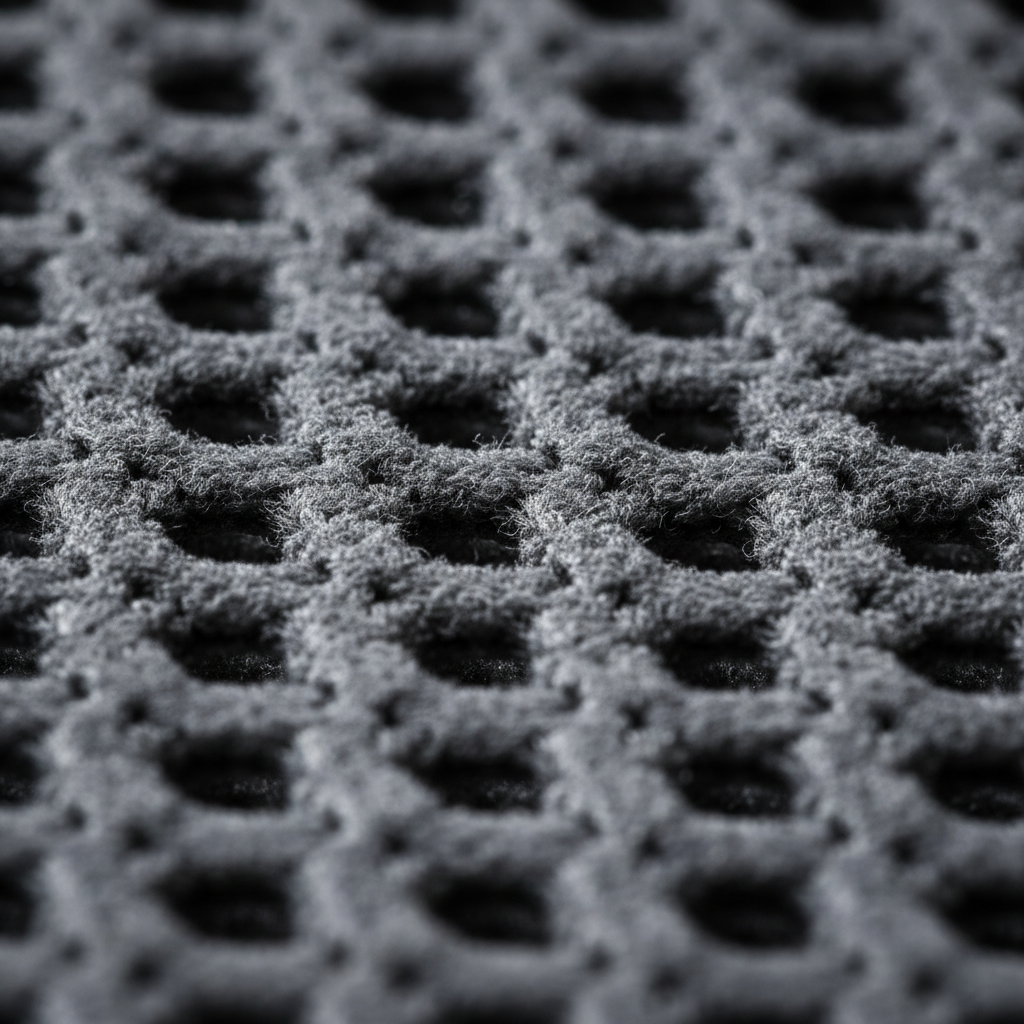
Grid Fleece solves this through a unique knitting construction that we specialize in:
-
The Pillars (Raised Areas): These lofted fibers trap body heat, providing the insulation value (CLO value) your customers expect.
-
The Channels (Voids): Between the pillars, we engineer thin channels. These allow hot air and moisture vapor to escape instantly, reducing the fabric weight without sacrificing core warmth.
Manufacturer’s Note: By adjusting the density and pattern of the grid (Box grid vs. Hexagon grid), we can fine-tune the CFM (Cubic Feet per Minute) air permeability to match your specific product positioning—whether it’s a winter mid-layer or a spring standalone piece.
Sourcing Guide: Key Specs for High-Performance Grid Fleece
If you are developing a product to compete with market leaders like the R1 Air or The North Face FutureFleece, here are the specifications you should discuss with us:
-
Ideal Weight (GSM):
-
160-180 gsm: For high-intensity "ultralight" activewear.
-
200-230 gsm: The "Goldilocks" zone for versatile hiking mid-layers (Most Recommended).
-
-
Composition Matters:
-
Don't just use 100% Polyester. We recommend a blend of 93-95% Polyester (or Recycled Poly) + 5-7% Elastane/Spandex.
-
Why? Grid fleece is often worn close to the skin. The added stretch ensures the "pillars" stay in contact with the body for thermal efficiency while allowing full range of motion for climbers and runners.
-
-
Texture Engineering:
-
We offer both Brushed Back (for softness) and Hard-Face options (for better layering under shell jackets without friction).
-
Why Your Brand Needs a Grid Fleece Line in 2025
From a manufacturing perspective, Grid Fleece offers the highest ROI (Return on Investment) for brands because of its Versatility:
-
Season-less Appeal: Unlike heavy 300gsm fleece which only sells in deep winter, Grid Fleece sells in Spring (outer layer), Autumn (outer layer), and Winter (base/mid-layer).
-
Technical Perception: Visually, the texture looks "high-tech." It allows you to command a higher retail price point compared to basic polar fleece, increasing your profit margins.
-
Sustainability Story: Because the grid structure uses negative space (air channels), we use less raw material to achieve the same warmth rating compared to solid fabrics. This aligns perfectly with sustainability goals.
Conclusion & Next Step
Consumers have spoken: they want breathability. As your manufacturing partner, we are ready to help you answer that demand.
We have developed a new series of "Active Grid" fabrics for the 2025 season, featuring optimized moisture-wicking finishes and GRS-certified recycled yarns.
Contact us at Stephen@fominte.com to get a free sample of our best-selling 210gsm Grid Fleece.
