.png?w=970&h=250)
Heavyweight Cotton Jersey Knit Fabric (200+ GSM): The Streetwear Standard for Serious B2B Buyers
What It Really Means
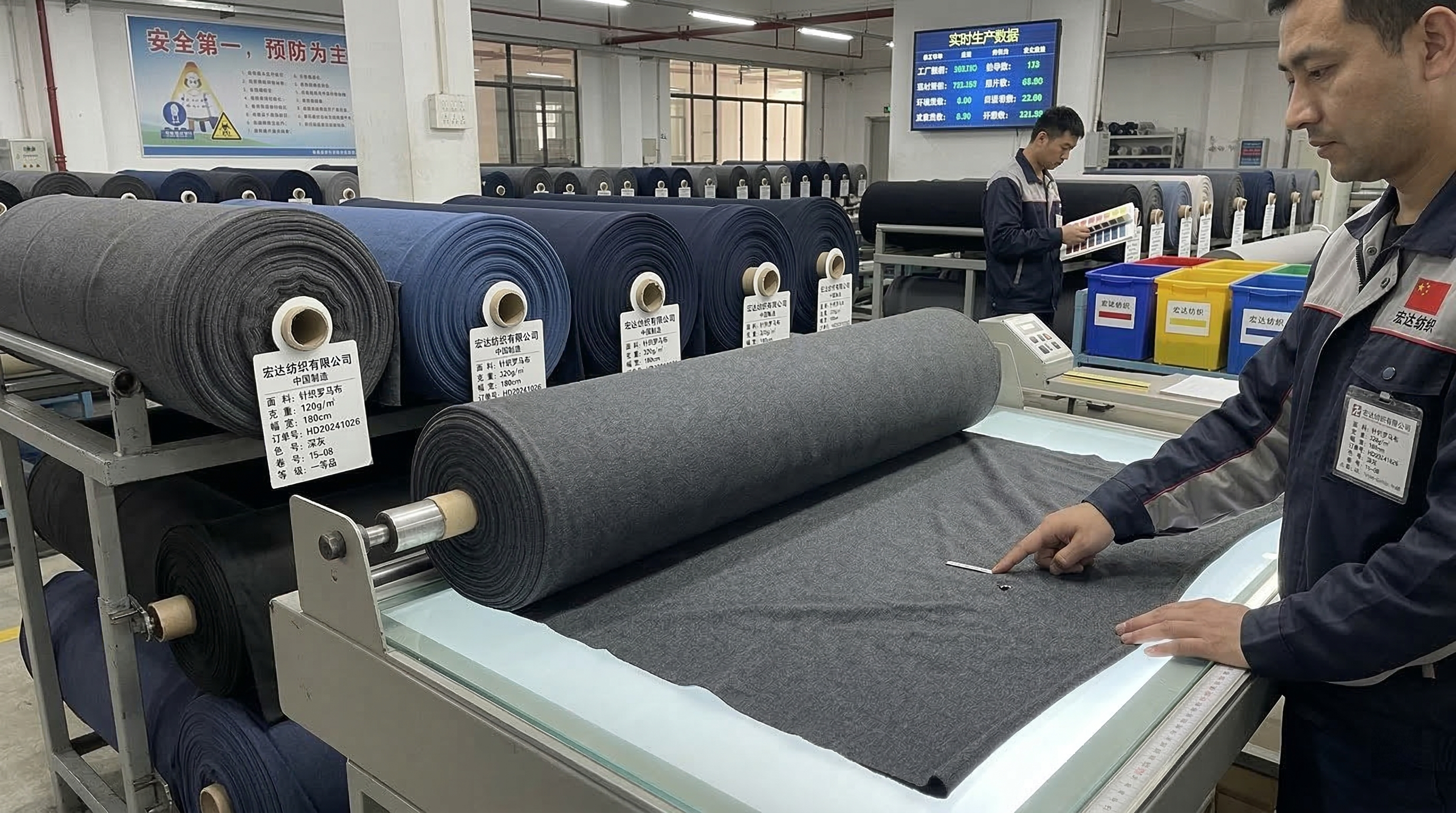
What heavy cotton jersey really means in production
When a buyer asks me for heavy cotton jersey knit fabric, I do not start with the trend language. I start with the production question behind it: do you need a fabric that simply sounds premium on a line sheet, or do you need one that will still look premium after cutting, sewing, washing, folding, and repeating across bulk orders?
That distinction matters because "heavyweight" gets used loosely in the market. One supplier may call 190 GSM heavy. Another may mean 220 GSM. A third may send a beautiful development sample at 230 GSM and then run bulk closer to 205 because the finishing line was adjusted for output instead of stability. On paper, all three can still be sold as heavy cotton jersey fabric. In production, they behave very differently.
For serious B2B programs, I usually treat 200 to 240 GSM as the practical working band for heavyweight cotton jersey fabric. But GSM alone is not the standard. The real standard is whether the fabric keeps its body, width, and handfeel without introducing new garment problems. A dense knit made with stable yarn and controlled finishing is useful. A high-GSM fabric with unstable torque and uncontrolled shrinkage is just an expensive headache.
This is especially true in streetwear and premium basics. The buyers I work with are not trying to buy "thick fabric" in the abstract. They are trying to achieve a clean silhouette, a structured drape, a better perceived retail value, and repeatable fit performance across thousands of garments. That means the knit density, yarn quality, compacting result, and relaxation control matter at least as much as the GSM label on the approval card.
The four performance risks buyers miss in heavyweight cotton jersey
GSM drift across lots is more common than buyers expect
The first hidden risk is GSM drift. A lab-approved swatch may read 220 GSM in a controlled sample room. Bulk fabric, however, is not judged by one swatch. It is judged by roll after roll, dye lot after dye lot, and by how that fabric behaves after relaxation.
This is where cheap heavy cotton jersey often breaks down. A mill pushes output, overfeeds the finishing line, or relaxes the cloth inconsistently. The result is a shipment where some rolls feel full and compact while others feel flatter and looser. Technically, the numbers may still sit inside a broad internal tolerance. Practically, the cutting room sees body differences, marker yield changes, and inconsistent garment weight.
For a premium tee program, that turns into real cost. Your boxy fit from the first production lot can look sharper than the second. Folded packs stack differently. Washed garments land outside the expected handfeel. Merchandising reads it as "same style, slightly different product." Procurement reads it as a preventable control failure.
That is why I would never evaluate a heavy cotton knit fabric supplier by nominal GSM alone. I want to know how they measure it, at what stage they measure it, and what tolerance they are prepared to stand behind in writing.
Shrinkage and spirality do more damage than most cost sheets show
Heavyweight cotton jersey sounds safer than lightweight jersey, so some buyers assume shrinkage risk is lower. That is not how single jersey works. A heavier fabric can still shrink aggressively or twist after washing if the knitting, dyeing, drying, and compacting sequence is rushed.
In bulk T-shirt production, the real problem is not only total shrinkage. It is uneven shrinkage. If body panels, sleeves, and neck rib are not moving in a controlled range, your finished garment fit starts drifting. Add a garment wash or enzyme wash later, and the issue becomes harder to hide.
Spirality is the other part buyers sometimes underestimate. Single jersey naturally carries torque. If yarn balance, loop formation, and finishing control are weak, the side seam can rotate after wash. A consumer may not know the technical term, but they immediately see the result: the tee twists on the body and the hem no longer hangs clean.
For large-volume programs, that creates a chain reaction. Pattern corrections start creeping in to compensate for fabric behavior. Sewing teams make handling adjustments. QA raises more fit-related comments. Suddenly the fabric that looked cheaper per yard is more expensive per garment.
Torque and panel skew are signs of process discipline, not bad luck
I see too many heavyweight jersey quotations that talk about softness, breathability, and premium touch, but say nothing about torque control. That omission tells me a lot.
In heavy cotton jersey knit fabric, torque is not a random accident. It usually points back to yarn quality, knitting setup, finishing tension, or insufficient relaxation before inspection. If a supplier cannot explain how they manage skew and side-seam twist in single jersey, they probably expect the garment factory to absorb the problem.
That may work on low-risk commodity styles. It does not work well for structured streetwear silhouettes, oversized fits, drop-shoulder bodies, or premium tees where the line balance is visually important. The heavier the fabric, the more obvious the garment distortion becomes when something is off.
Dark shades expose weak process control fast
Buyers often test heavyweight jersey in white, natural, or grey marl during development, then move to black, charcoal, navy, or washed pigment tones for bulk. That is exactly where hidden weaknesses appear.
Dark shades make shade variation more visible. They also make finishing inconsistency easier to feel. One roll may have a dry, packed handfeel. Another may feel slightly flatter or harsher. On a lighter shade, some teams would let it pass. On black heavyweight cotton jersey fabric for premium tees, the inconsistency is much easier to spot.
That is why repeat dark programs require stronger dye-lot discipline than the quote sheet usually suggests. If the supplier treats heavyweight cotton jersey like a commodity fabric, you will see that in the second or third reorder.

How we evaluate 200-240 GSM jersey for streetwear programs
When I review a heavyweight jersey program, I do not look at the handfeel first. I look at whether the supplier has a stable approval process.
The first check is fabric construction clarity. I want the supplier to specify yarn count, composition, target GSM, usable width, and finishing route with no vague wording. "Heavy cotton jersey" is not enough. If the construction language is soft, the bulk result is usually soft too, and not in a good way.
The second check is tolerance discipline. For 200 to 240 GSM cotton jersey fabric wholesale programs, buyers should ask for target tolerances on GSM, width, shrinkage, and spirality before production starts. If the supplier only promises "industry standard" without giving numbers, that is not control. That is an escape hatch.
The third check is wash-result predictability. We care about how the fabric behaves after realistic treatment, not just in greige or fresh-finished condition. A supplier serious about heavyweight cotton jersey should be able to discuss wash testing, relaxation, and the likely movement range after finishing. If they cannot, your garment factory will become the testing lab.
If your team is still deciding between core jersey constructions, it helps to compare this against 100% cotton jersey knit fabric wholesale sourcing fundamentals before locking a heavyweight spec. The base control logic is similar, but heavyweight programs punish drift much faster once silhouette and retail positioning are tied to fabric body.
The fourth check is sewing performance. Heavyweight jersey should still run cleanly through sewing without creating unnecessary puckering, neckline distortion, or handling delays. This is one place where some buyers get trapped by overbuilt fabric. They think a denser jersey is always better, but if the construction becomes stiff without balanced finishing, garment assembly gets slower and the final feel can become too board-like for the intended style.
At Fominte, my preference is to approve heavyweight jersey only after we see consistent roll behavior, not just one good strike-off or one strong hanger sample. Repeatability matters more than the first impression. A premium development swatch is easy. A repeatable bulk standard is the real test.
How to compare suppliers without getting distracted by price per yard
Price per yard is still important. I am not pretending otherwise. But for heavy cotton jersey knit fabric, it is a weak first filter if used alone.
I would compare suppliers through five questions.
First, what tolerance are they ready to guarantee on GSM, width, and shrinkage? Not "usually." Not "approximately." What will they commit to for bulk.
Second, how do they handle repeat orders? Many suppliers can produce one acceptable lot. Fewer can keep the same handfeel and body on reorder when yarn source, dye load, or finishing line conditions shift. If you are building a core tee program, reorder consistency matters more than launch sample polish.
Third, what is their communication quality when something drifts? A disciplined supplier will flag a shade risk, a compacting limitation, or a width issue before shipment. A weak supplier ships first and explains later. In B2B sourcing, early bad news is almost always cheaper than late silence.
Fourth, what is the real effect of their lead time? Some quotations look attractive because they are built on compressed planning assumptions. Then lab dips slip, bulk knitting starts late, and finishing gets squeezed. That is when shrinkage and handfeel stability start suffering. A realistic lead time from a stable mill can outperform a fast promise from a reactive one.
Fifth, how much hidden garment cost are you carrying if the fabric is unstable? This is where the cheapest quotation often stops being the cheapest option. Extra pattern correction, more garment wash variability, additional QA hours, and higher claim risk all land somewhere in the system. They just do not appear on the initial fabric quote.
I often tell buyers that heavy cotton knit fabric supplier evaluation should feel slightly boring. If the conversation is all mood boards and no tolerances, something is off. Good fabric sourcing is usually built on calm details, not dramatic claims.
When heavyweight cotton jersey is the right choice, and when it is not
Heavyweight cotton jersey is a strong choice when your product needs visual substance. Premium T-shirts, structured basics, boxy silhouettes, and streetwear programs all benefit from a fabric that can hold a cleaner outline and deliver more perceived value at first touch.
It also works well when the brand wants a stronger shelf presence. A 200 to 240 GSM jersey can communicate quality immediately if the knit is balanced and the finishing is under control. That is part of why heavyweight programs remain popular even when lighter fabrics may cost less.
But it is not the right answer for every line. If your market is hot-climate casualwear, soft drape-led tops, or price-sensitive basics, forcing a heavyweight cotton jersey spec may create more problems than it solves. The fabric can feel too warm, the silhouette can become too rigid, and the cost gain may not translate into a better sell-through result.
And if stretch recovery matters more than body, buyers should compare heavyweight single jersey against stretch cotton jersey wholesale programs rather than assuming more weight will solve every performance concern. Weight and recovery are different sourcing decisions.
I also think some brands choose 240 GSM because it sounds more premium than 200 GSM. That is not always smart sourcing. If 200 or 210 GSM already delivers the body, handfeel, and fit stability your garment needs, moving heavier may reduce comfort and increase cost without improving the final product enough to matter.
The right question is not "what is the heaviest jersey we can buy?" It is "what fabric weight gives this garment the best balance of shape, comfort, consistency, and production control?"
That is the question larger buyers should keep asking, because it turns a trend keyword into a profitable sourcing decision.
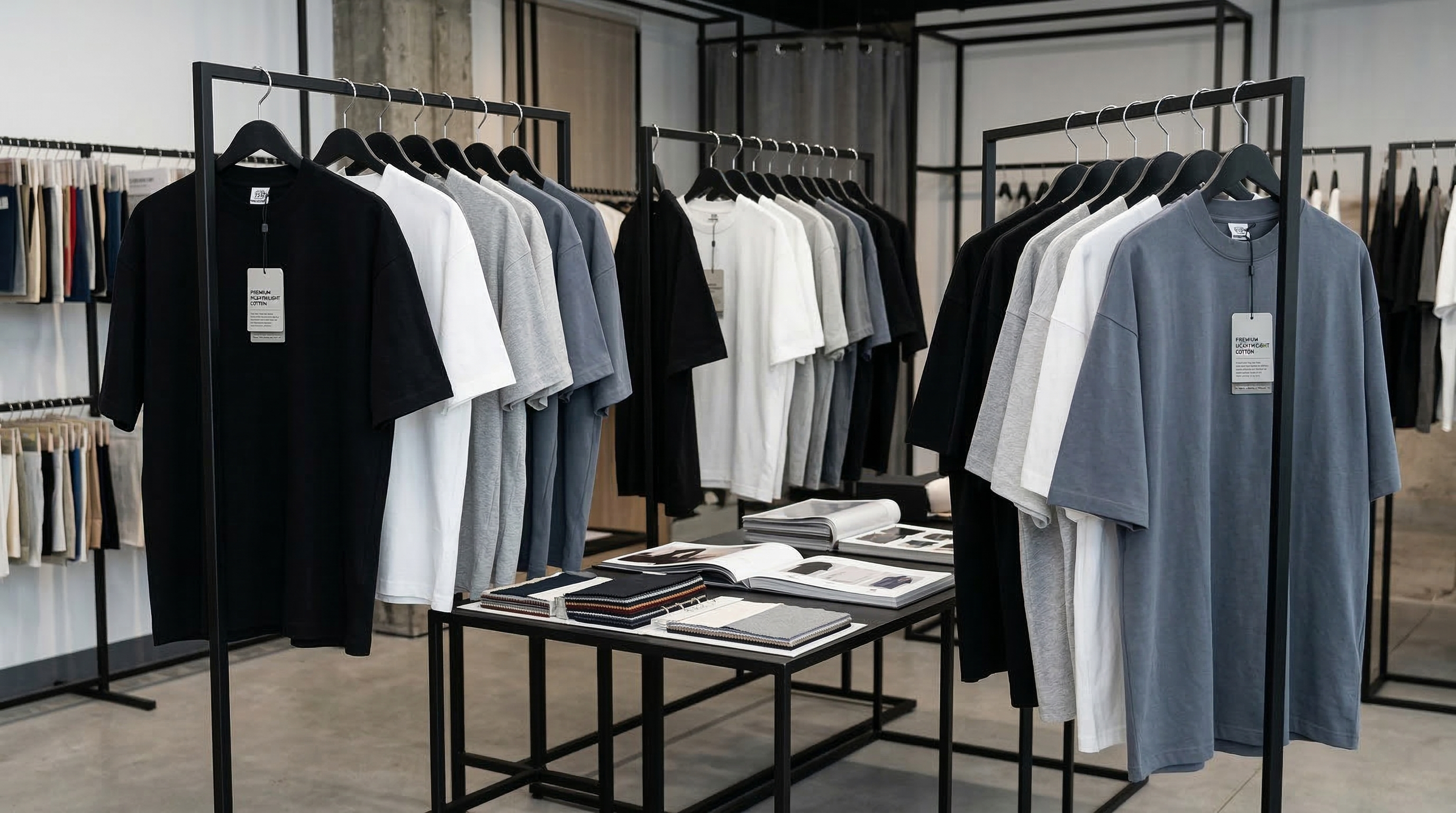
A final note for procurement teams
If you are sourcing heavyweight cotton jersey fabric for a core line, I would recommend treating the fabric approval stage as a production risk review, not just a costing exercise. Ask for the numbers that predict garment stability. Ask how repeat orders are controlled. Ask what happens when a lot falls outside target. Those conversations tell you far more than a polished swatch book.
The buyers who usually get the best results are not the ones chasing the lowest number. They are the ones who understand that stable fabric makes the rest of the supply chain easier to manage.
If your team is building a 200+ GSM cotton jersey program and wants a more technical evaluation framework, contact us at info@fominte.com. I can have our team share the checkpoints we use for GSM tolerance, shrinkage review, spirality assessment, and reorder consistency before bulk cutting starts.
When to Use & Avoid
Premium streetwear T-shirts
✅ Use When
- boxy tees
- structured basics
- core black programs
⚠️ Avoid When
- ultralight summer tops
- soft drape-led silhouettes
Mid-size repeat programs
✅ Use When
- seasonal reorder styles
- core essentials
- private label basics
⚠️ Avoid When
- one-off fashion experiments
- tiny trial buys
⚡ Common Mistakes to Avoid
Everything You Need to Know
Conclusion